Durlach
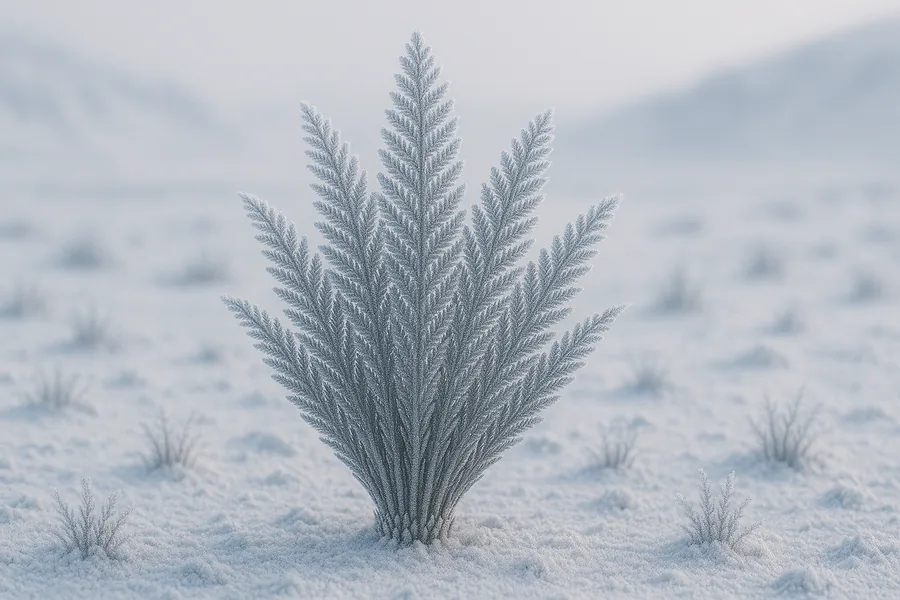
Durlach grows as narrow, dense vertical fronds that superficially resemble ferngrass Natural History Ferngrass Ferngrass rises in quiet, endless ranks across the skin of Elshore, each stalk growing straight and slender, branching into countless feathery fronds that weave the air into gre... blades but are finely divided like true ferns, forming tight clonal mats each stalk lined with underside sori protected by microtrichomes and antifreeze proteins. It colonises the edges of habitable terrain in cold regions, from permafrost margins to wind-scoured ridges and the boundaries between frozen waste and thawing lowland, remaining photosynthetically active down to approximately minus twenty degrees. Among the first plants to establish on newly thawed ground, Durlach binds soil and prepares it for more complex species to follow.
Key traits
- Active photosynthesis persists down to minus twenty degrees through low-light chlorophyll analogues.
- Sori and reproductive structures are protected by biological antifreeze proteins, allowing spore production even in near-freezing conditions.
- Nutrients stored in root rhizomes provide reserves for rapid regrowth after dormancy periods.
- Tight, interconnected mat growth retains heat and moisture at ground level, creating a microclimate warmer than the surrounding air.
- Durlach is an edge coloniser, erosion reducer, and spore-spreader, not documented as a food source; its significance is ecological.