Natural History
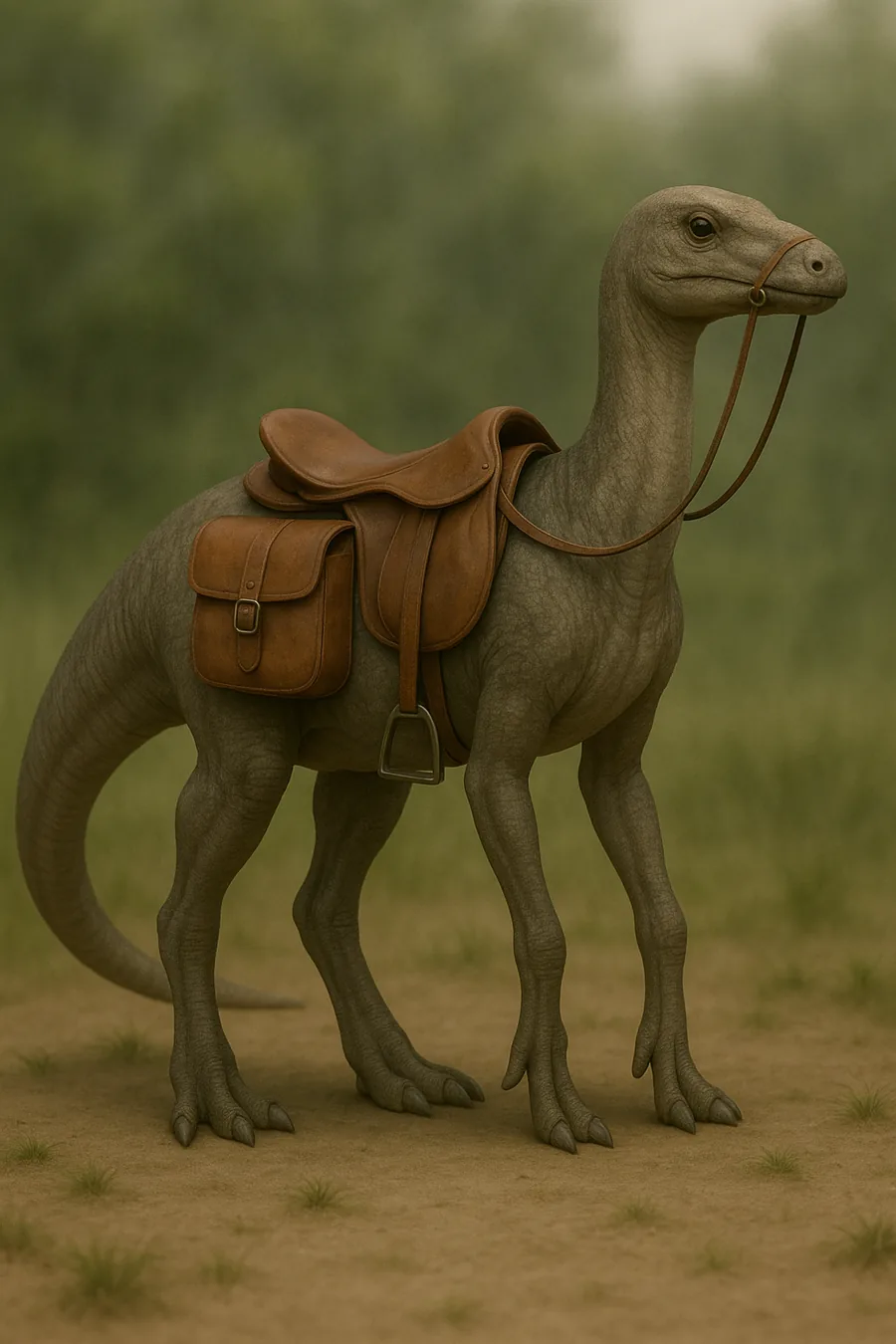 Caeran The Caeran is a stocky, endurance-built quadruped standing 140 to 160 cm at the withers, its broad shoulders and wide splayed claws suited to the moist floodbanks and fern-grass plains of Northland. Its skin is covered in scales so fine they read as wrinkled hide at a distance, giving a moving herd the uncanny appearance of stones marching under their own will. Patient, cautious, and almost impossible to panic, Caerans are the primary beast of burden and riding animal for the plains peoples of Northland.
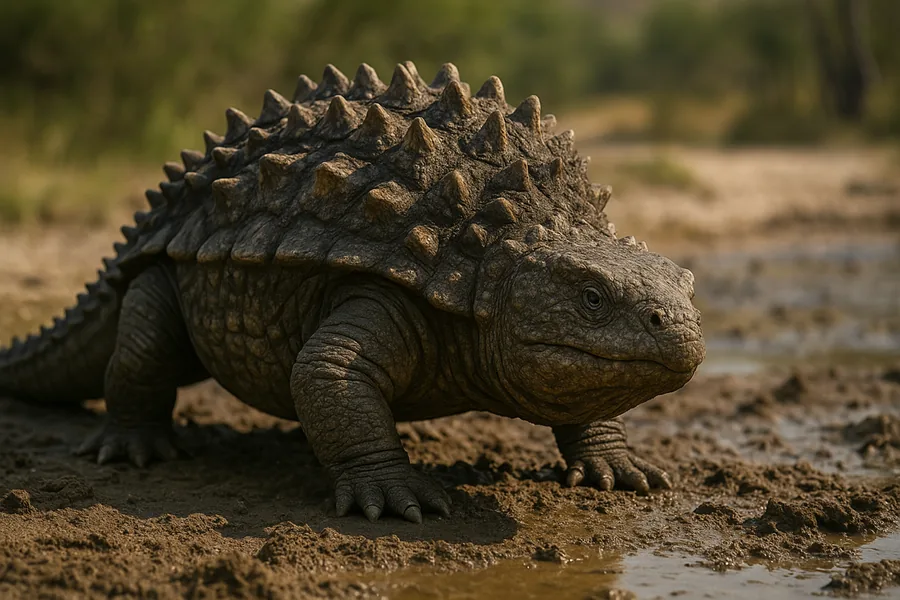 Cragback The Cragback is a heavily armoured lowland grazer built like a living boulder, its back a broken wall of plates and old scars. It wallows through swamp lowlands and boggy terrain with the slow, unstoppable certainty of a rising flood. Predators that snap at its flanks are largely ignored; those foolish enough to provoke it discover that when the mud flies, bones splinter.
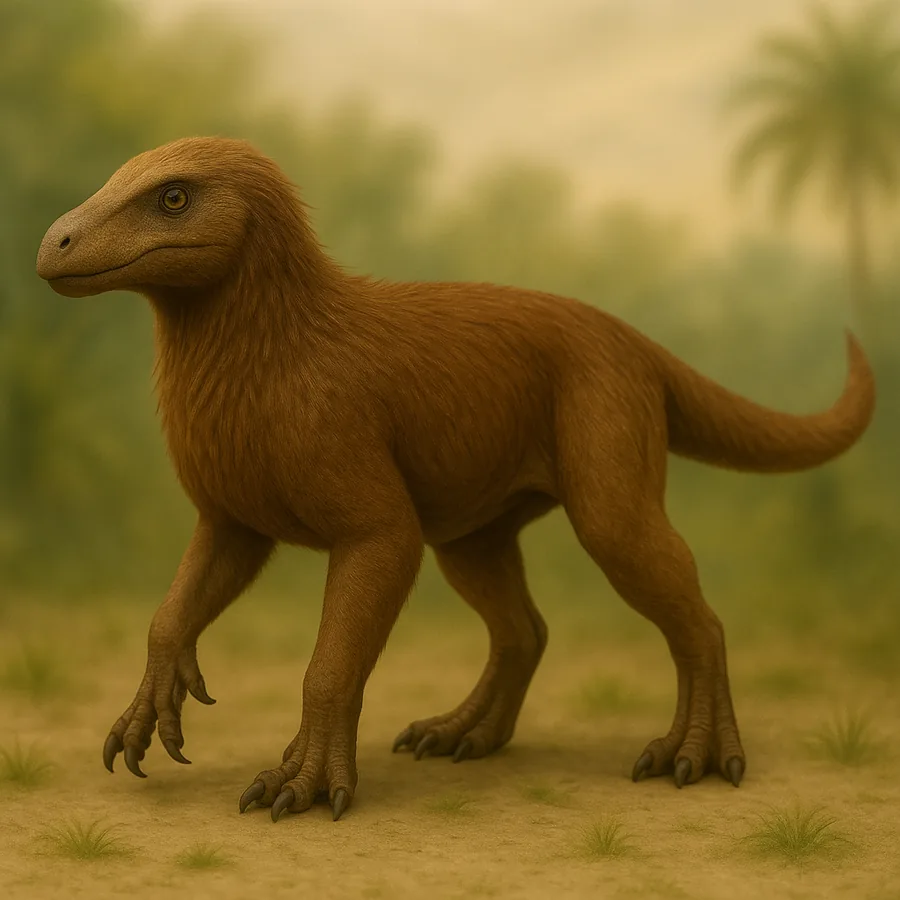 Draven The Draven is a medium-bodied quadruped standing 70 to 90 cm at the shoulder, its broad chest and hindquarters wrapped in dense insulating pillow feather in earth tones of clay, rust, and smoke-grey. A triangular head with wide-set amber or pale gold eyes gives an expression of constant intelligent awareness, while a long stiff tail arches sharply as a warning when danger is sensed. Fiercely loyal and deeply bonded to its household, the Draven is the primary domestic companion and protector across the settled lands of Elshore.
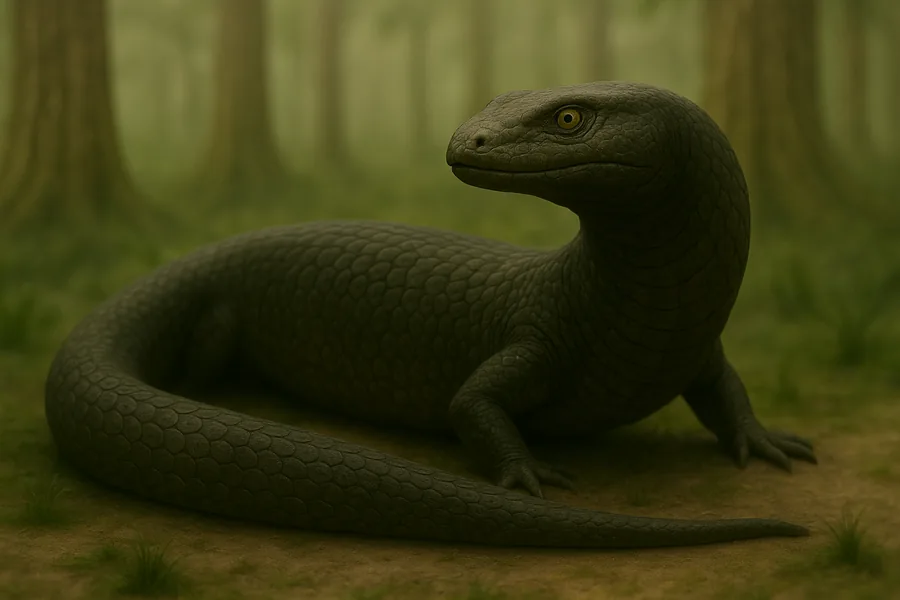 Drethalisk The Drethalisk is a heavy-bellied, armoured serpent-lizard that lurks coiled in the black depths of swamp pools, its back slick with filth and plated against the world above. It is a creature of patient, sudden violence: it does not pursue its prey but simply waits, then strikes with force enough to crack stone. Feared throughout the marshlands, no domestication has ever been documented.
- Cryner The Cryner is a heavy, broad-jawed swamp predator with mottled grey-brown hide that sinks into the bank-mud until the world forgets it is there. It settles into the river banks and slow channels of Baramma and the great deltas, holding its stillness with the patience of a grave-digger until prey strays close, then surges forward in a spasm of snapping jaws and broken bones. River-clan hunters say it is older than the rivers themselves, and that it never rushes because the river will bring its prey to it eventually.
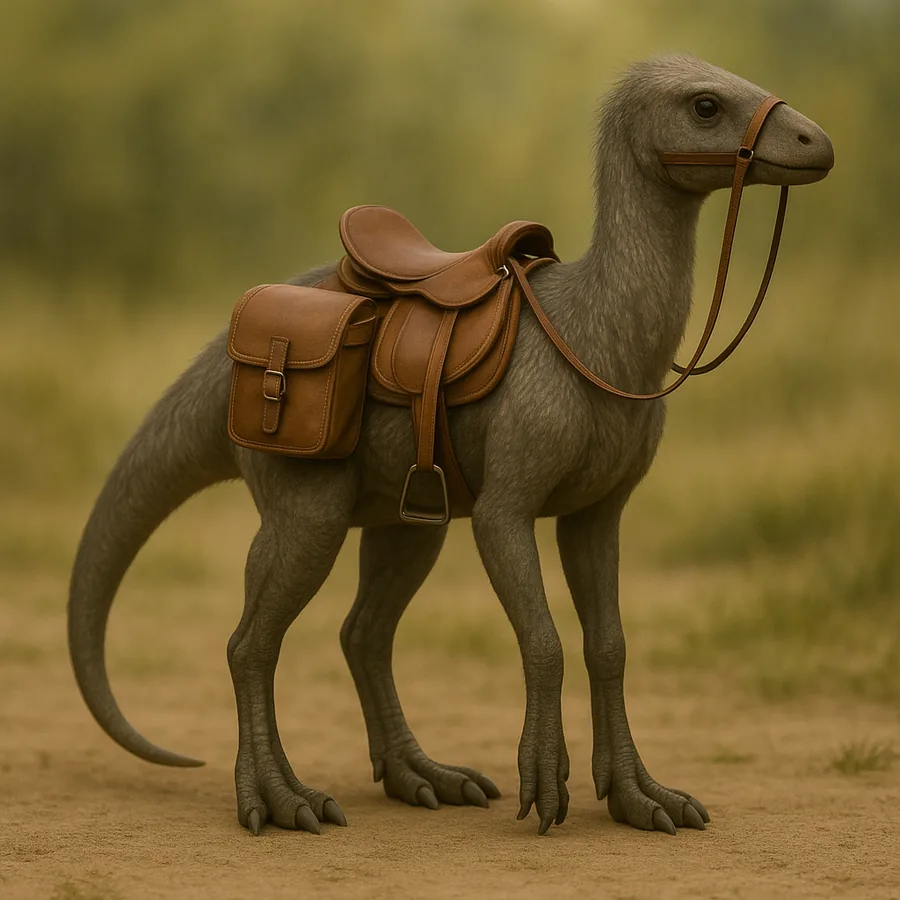 Herin The Herin is a compact, low-slung quadruped standing 100 to 110 cm at the withers, its strongly muscled frame covered in a fine coat of muted grey-tawny pillow feather. Originally bred by the Annils of Northland's broken foothills and misted uplands, it now serves across Maan-settled lowlands and trading towns wherever a small, reliable burden-animal is needed. In motion it does not run like a swift courier mount or sprint like a sprinter; it trudges with the unbending will of a river that will not be turned.
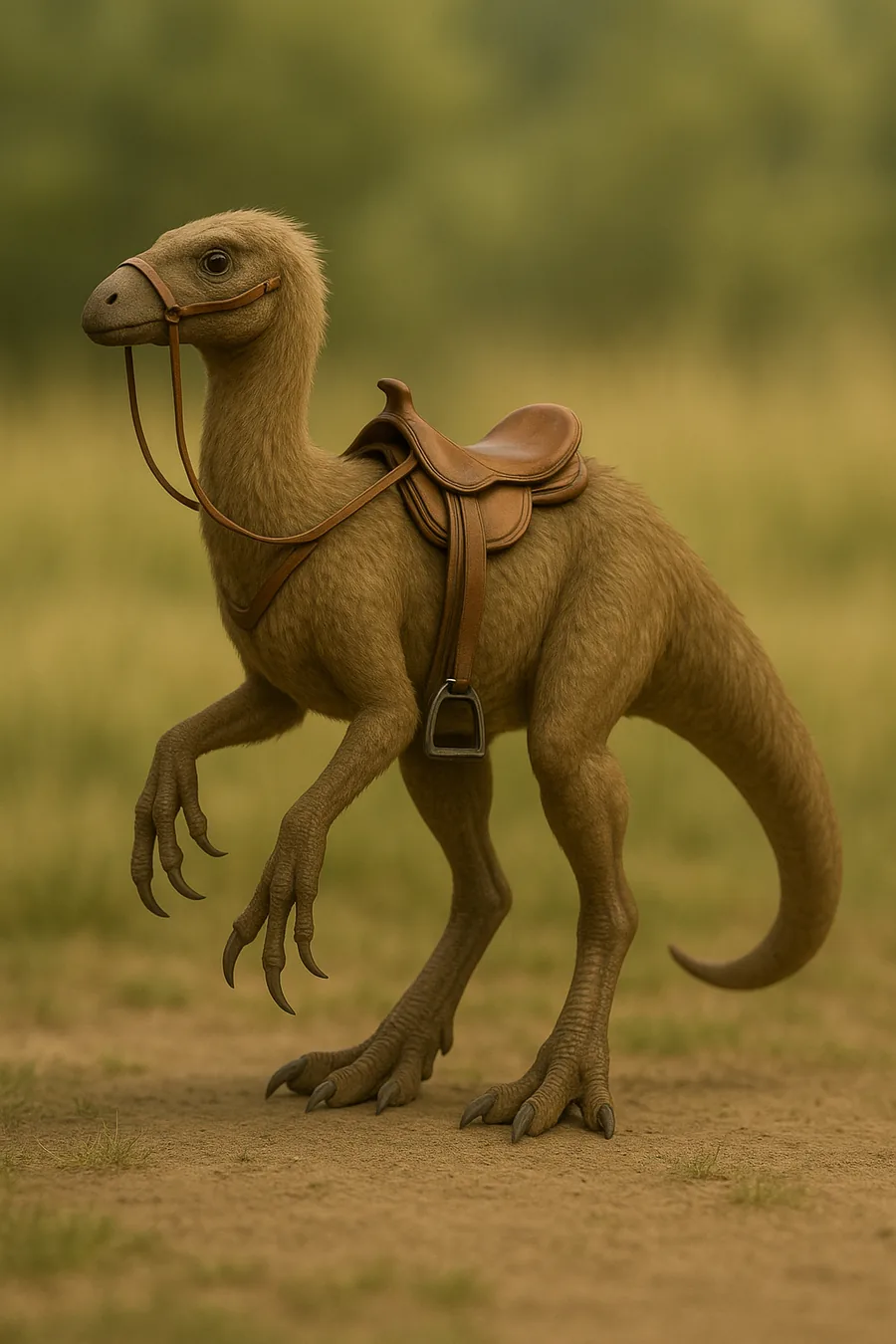 Isyran The Isyran is a tall bipedal runner standing 180 to 190 cm at the withers, with long heavily thighed legs, a broad chest, and a long feather-covered tail carried low as a counterweight. Its body is sheathed in coarse needle-like outer feathers over a softer insulating underlayer, and these feathers bristle into raised needles along the neck, shoulders, and spine when the animal is disturbed or angered. At full speed across the rocky highlands and mist-fed steppe-terraces of northern Northland, the Isyran seems less like a running beast and more like a blade carving the landscape.
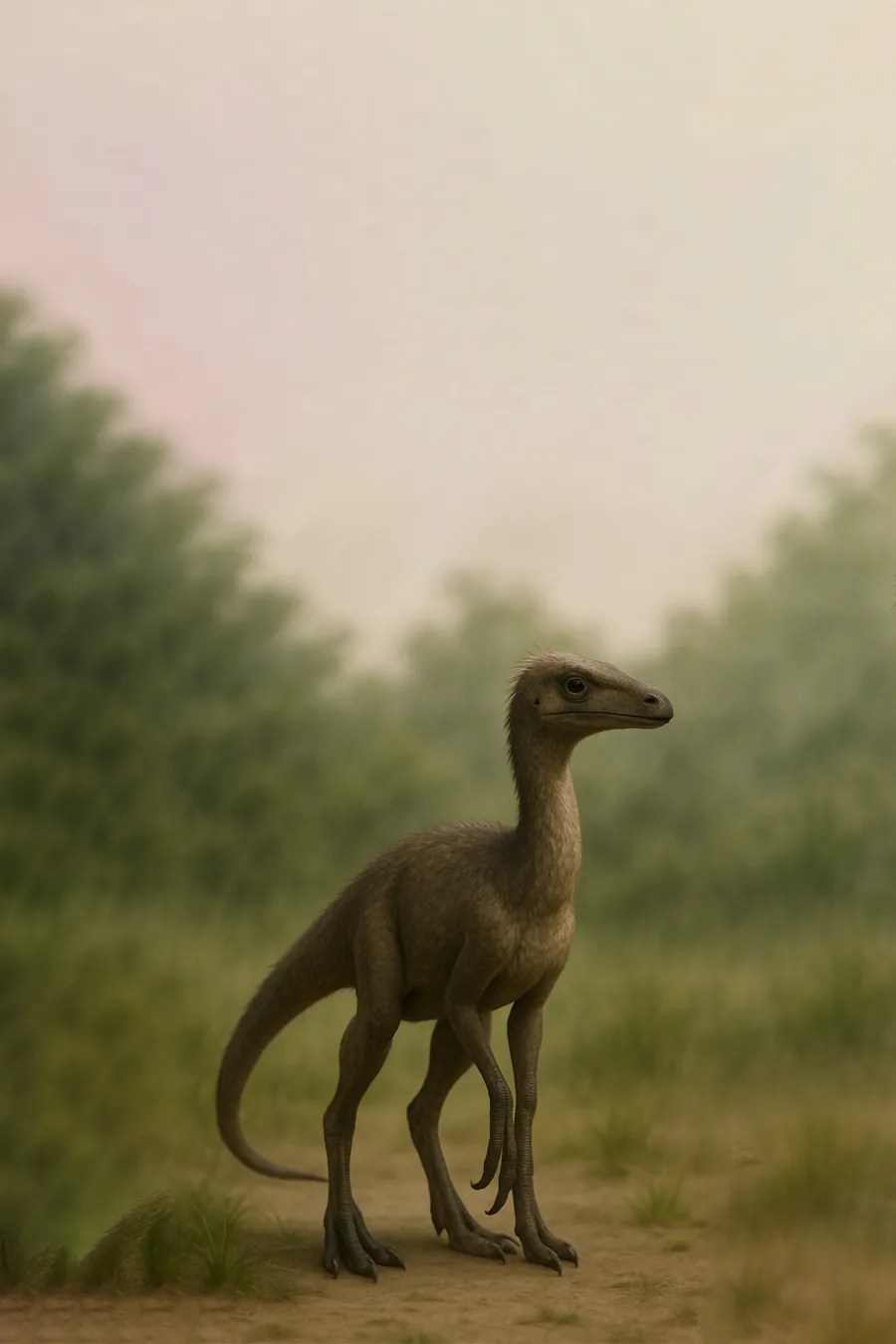 Kirrut The Kirrut is a small, agile quadruped standing 30 to 40 cm at the hip, its slender body corded with surprising strength beneath soft, tightly layered pillow feather ranging from muted ash to pale grey. A narrow sharp-beaked head swivels in constant vigilance, and a whip-thin tail balances its rapid darting leaps and sudden lunges. Though not affectionate in the way herd-bound creatures are, it guards territory and household alike through silent proximity and efficient elimination of threats.
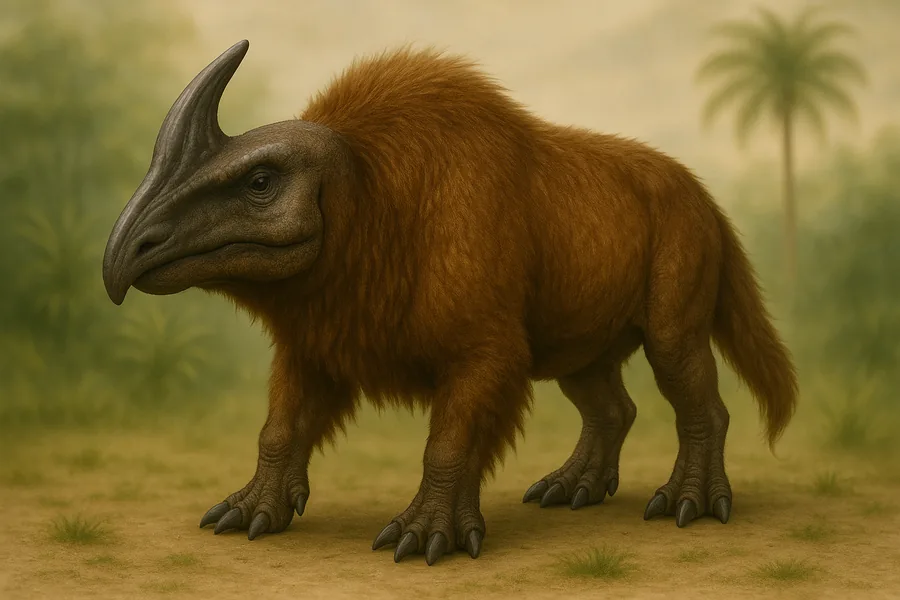 Navaar The Navaar is a massive quadruped standing 230 to 260 cm at the withers, heavy-bodied and broad-shouldered, with blunted horns curving low to the skull and a thick coat of bristle-textured pillow feather layered over weather-hardened skin. Wild herds roam the open fern-plains and horsetail marshes of Northland's broad valleys, moving seasonally with water levels and fresh growth. Domesticated Navaar are the primary draft animals for ploughing and heavy hauling, and the slaughter of a single animal is enough to call the whole village into a day of feasting and song.
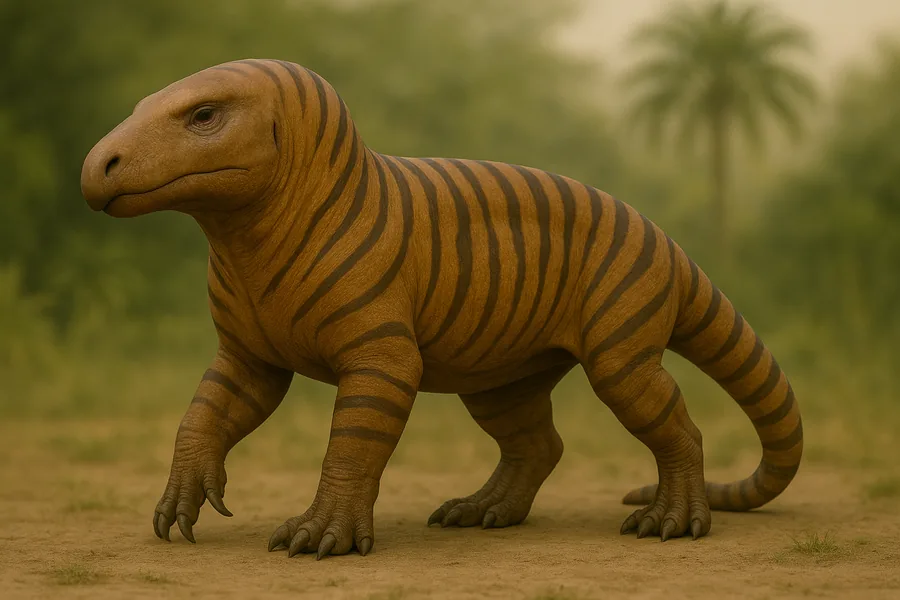 Sargil The Sargil is a heavy, wide-bodied quadruped standing 110 to 130 cm at the shoulder, its tough leathery skin bearing dark striping and a faint underlying scale texture along the spine and tail. A blunt, powerful skull houses crushing jaws capable of cracking bone and sundering heavy hide, while a sweeping tail balances sudden lunges forward. Patient and solitary, the Sargil haunts fern-thickets and river-border jungles where dense vegetation lets it stalk prey with hours of motionless waiting.
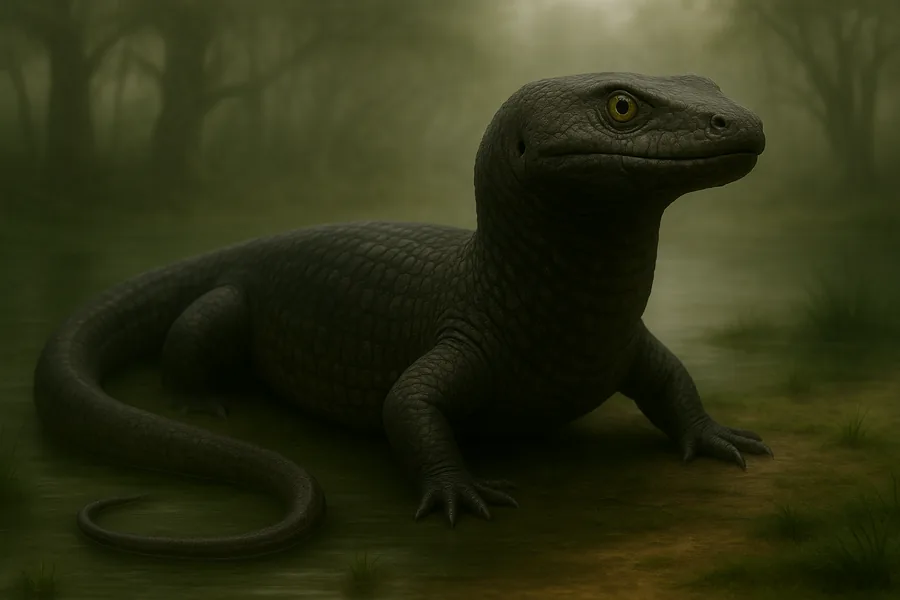 Siltback Grazer The Siltback Grazer is a lumpen, slow-moving semi-aquatic herbivore of the bog and swamp lowlands, its broad back often wearing a living garden of moss and plant growth accumulated through its unhurried wading. Dim of eye and dull of tooth, it chews at horsetails and swamproots with stubborn persistence, seemingly oblivious to the many predators that share its habitat. It endures as a staple prey animal not through speed or armour but through sheer durability.
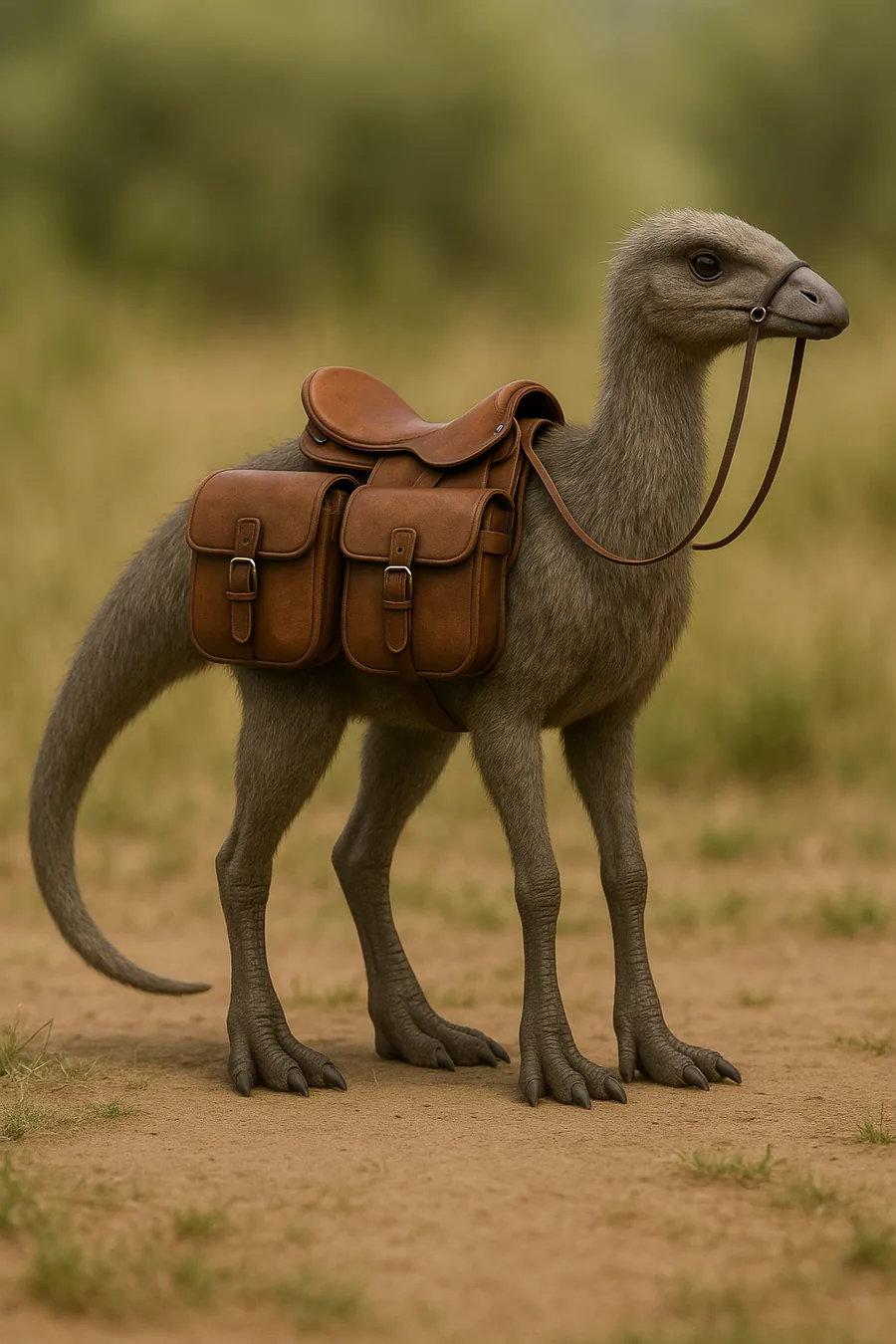 Talvor The Talvor is a light, slender, long-limbed quadruped standing 140 to 160 cm at the withers, its lean frame sheathed in soft pillow feather of grey, dust-brown, or pale ochre that blends into the scrub-plains and desert margins of Northland's drylands. Built entirely for speed and long-distance sprinting, a herd at full gallop moves less like individual beasts and more like the land itself breathing faster. Sharp-minded and sensitive, the Talvor is the primary courier and messenger mount for desert traders, plains clans, and mobile scout detachments.
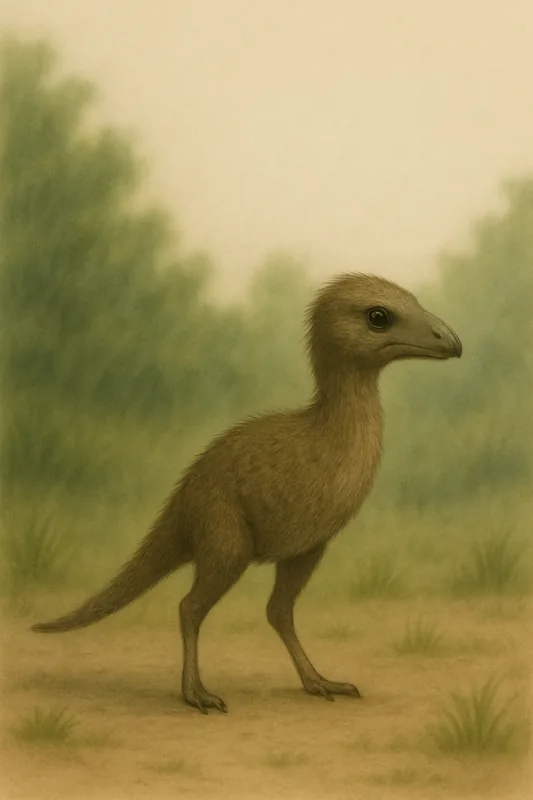 Tirin The Tirin is a small, compact bipedal runner standing 30 to 60 cm at the withers, its rounded body densely covered in short, soft pillow feather, finer on the belly and slightly coarser along the spine. Large bright eyes grant keen sight for spotting predators and tiny morsels alike, while a hardened beak tips the narrow snout for pecking and tearing at shoots, seeds, and insects. A flock in flight looks like a cloud of mist kicked up by their own feet, and in settled lands they serve as egg-layers, alarm-callers, and controllers of insect and seed dispersal.
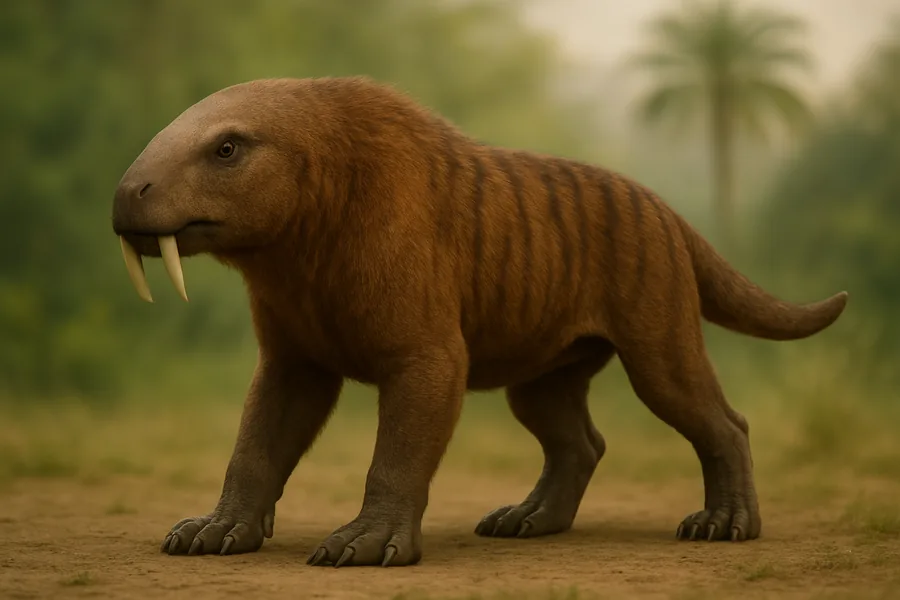 Trif The Trif is a heavy-set, low-slung quadrupedal predator standing 170 to 190 cm at the shoulder, its barrel chest and massive forelimbs built for ambush and brutal holds. The body is covered in thick velvet-textured pillow feather in muted rust and deep earth tones, broken by faint darker striping across the ribs and haunches that renders the animal nearly invisible against broken stone and ruin-field shadow. Long sabre-like tusks descend from the upper jaw, pale bone to ivory-cream on adults, designed not merely to puncture but to tear and dominate prey larger than itself.
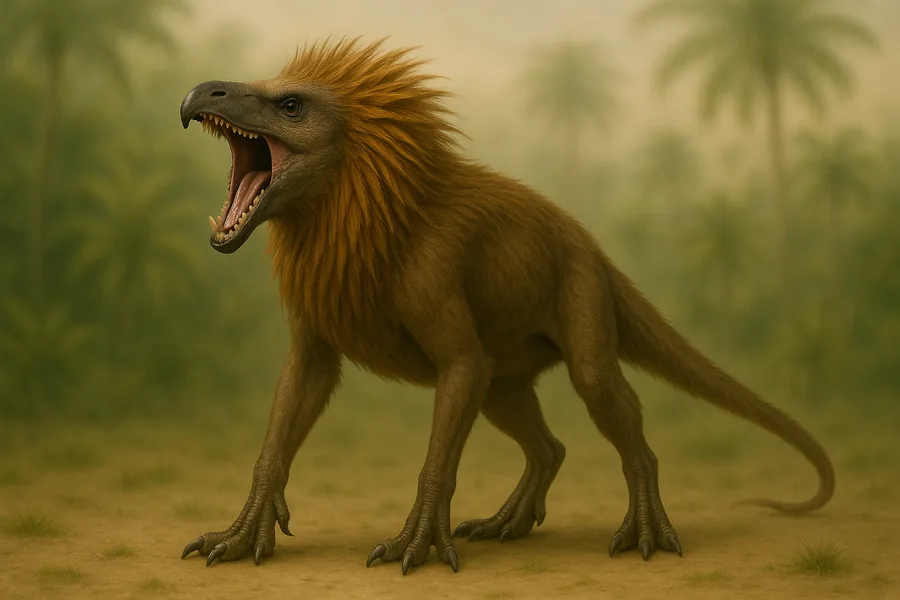 Vaelen The Vaelen is a towering quadrupedal apex predator standing 320 to 340 cm at the shoulder, massively muscled yet agile, with a broad wedge-shaped head crowned by raised needle feathers that ripple when it roars. A superficial feather layer covers the enormous frame, and at full charge the animal becomes, as the saying goes, a moving wound in the world. It dwells at the edges of deserts, drylands, and semi-arid savannahs, with feral subpopulations enduring even the frozen highlands; its mere sighting near a village is enough to trigger a full lockdown.
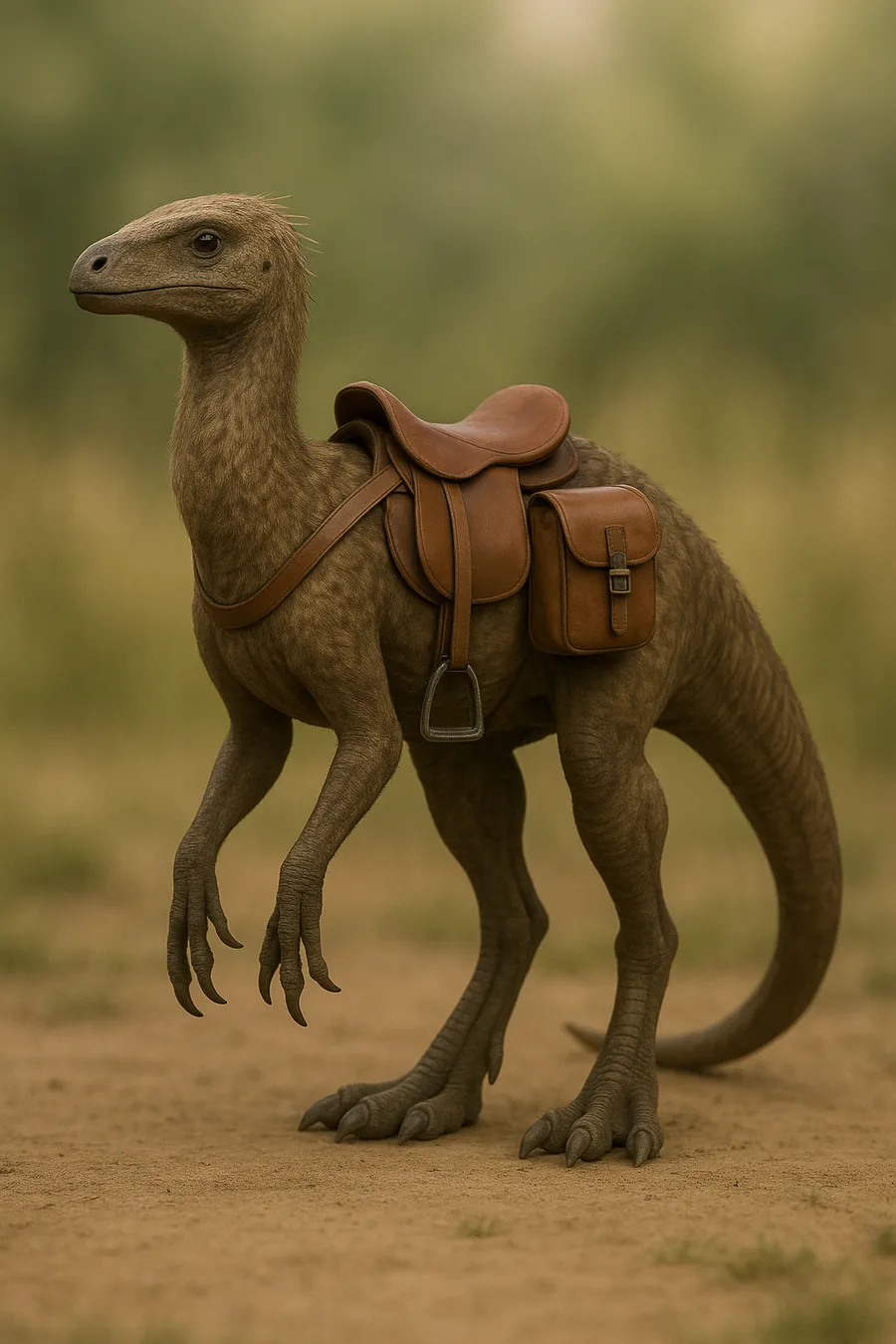 Veyran The Veyran is a massive bipedal predator standing 320 to 340 cm at the withers, broad-chested with immense clawed arms and a body covered in coarse needle feather along the spine and shoulders over fine leathery scaled skin in dark earth tones and jungle green. Apex predator of the dense southern jungles and steamy floodplains south of Baramma, it forms stable bonded herds of 15 to 20 adults and is almost never challenged in the wild. Only the Meirs, with their deep natural sensitivity and months of patient training, are capable of forming a true bond with one.
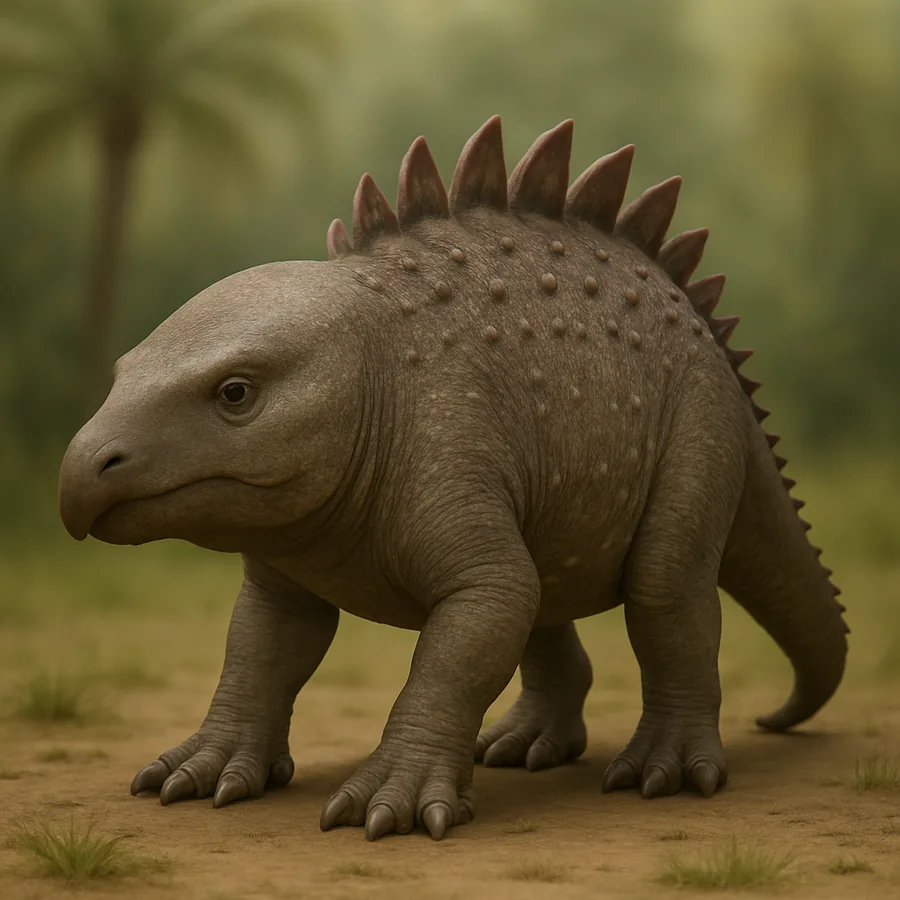 Voshak The Voshak is a low-slung, barrel-bodied quadruped standing 100 to 130 cm at the shoulder, compact but extremely powerful, with thick clawed feet built for digging and rooting. Two distinct regional forms exist: northern and temperate Voshaks bear toughened bare skin with faint scales, while southern cold-adapted populations carry dense insulating pillow feather billowing like short capes of dusted charcoal or russet under frost-winds. Populating nearly every region of Elshore, the Voshak is the primary meat and leather animal across the known world.
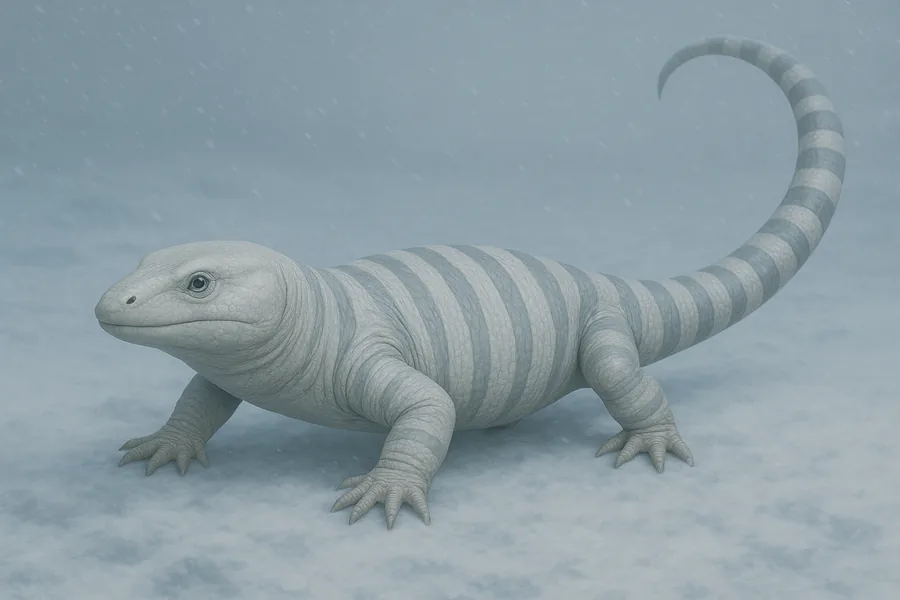 Whitescale Therlak The Whitescale Therlak is a broad-bodied coldland crawler bearing a pale, ghost-marked hide that renders it half-seen in the blowing drifts of the icy ridges it inhabits. Kin to the White Surrak in bulk, it glides along frozen terrain with a crushing, unstoppable momentum, moving on through whatever lies in its path. Some say the Whitescales know old roads laid down beneath the ice when the world was young and cruel.
- Frothling The Frothling is a broad, lumpen coldland crawler clad in pebbled hide that stays partly buried in the snow even when active. It sleeps beneath the crusted drifts of the Frozen Highlands and Maanamodilia, waiting for the brief thaws to stagger forth and nose through the softening slush for whatever small creature dared to outlast the winter. To see one surface is to know that the cold is far from done; Highland Erg shamans say it carries the world's last cold dream.
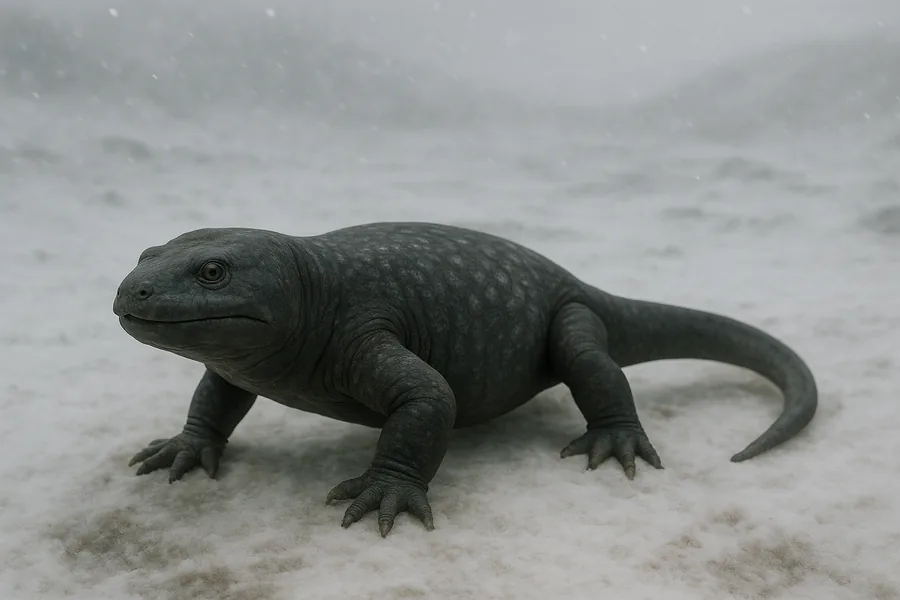 Black Surrak The Black Surrak is the hardiest of the coldland crawlers, broad as a fallen tree and black as frozen stone, its hide a battered coat of frost-hardened leather near impervious to fang, claw, or cold. It moves across the bitterest frozen wastes that even White Surraks will not enter, lumbering through blizzard winds with slow and utterly pitiless momentum. In the darkest winters, when the rivers freeze to the bone, the Black Surrak is the last living thing still walking.
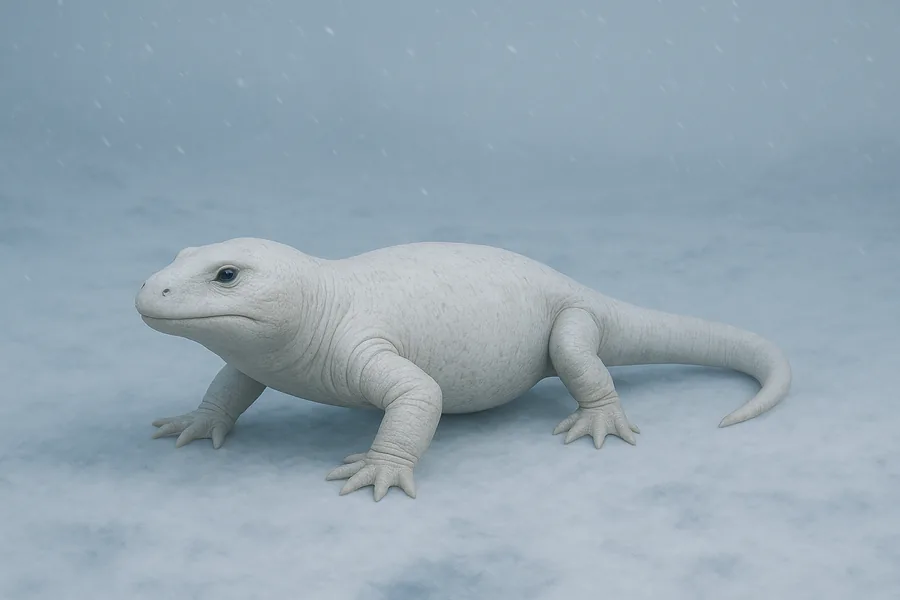 White Surrak The White Surrak is a broad-bodied permafrost crawler, thickset and slate-blue, its knobbled hide trapping what little warmth the frozen flats allow. It moves across the permafrost with trudging inevitability, peaceful in its vast slow passage but explosive in its response to being cornered. When a White Surrak strikes, bones shatter and breath is stolen in the freezing dark.
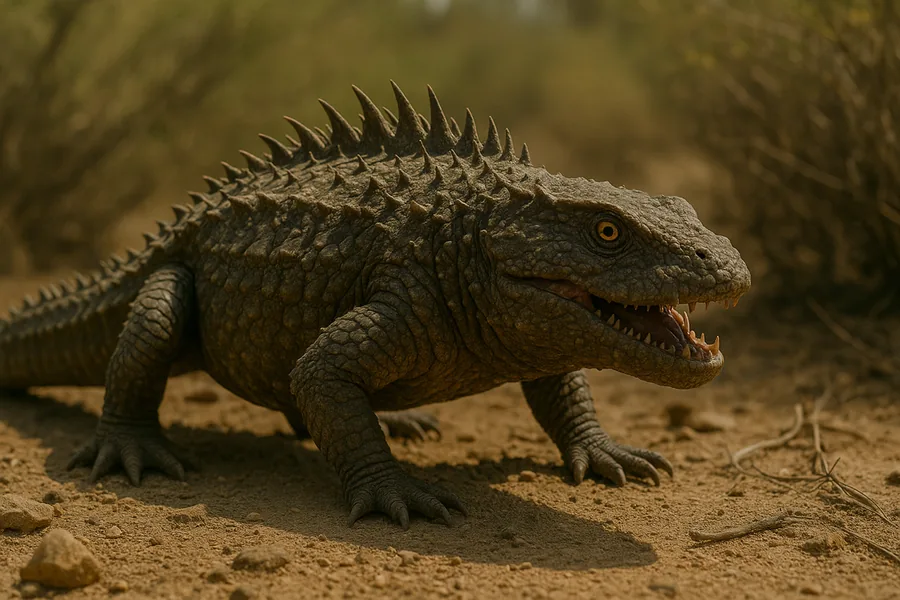 Bramblehound The Bramblehound is a ragged-needle scaled, heavy-shouldered scavenger-predator of scrubland edges and forest margins, particularly in arid and semi-arid regions. A nuisance alone, it becomes a devastating force in a pack, its howls carrying an eerie laughter-haunted quality that chases weaker creatures into the thorn and dust. Pack-coordinated and relentless, a Bramblehound group can pull down a wounded Navaar or strip a lone traveller to bone in minutes.
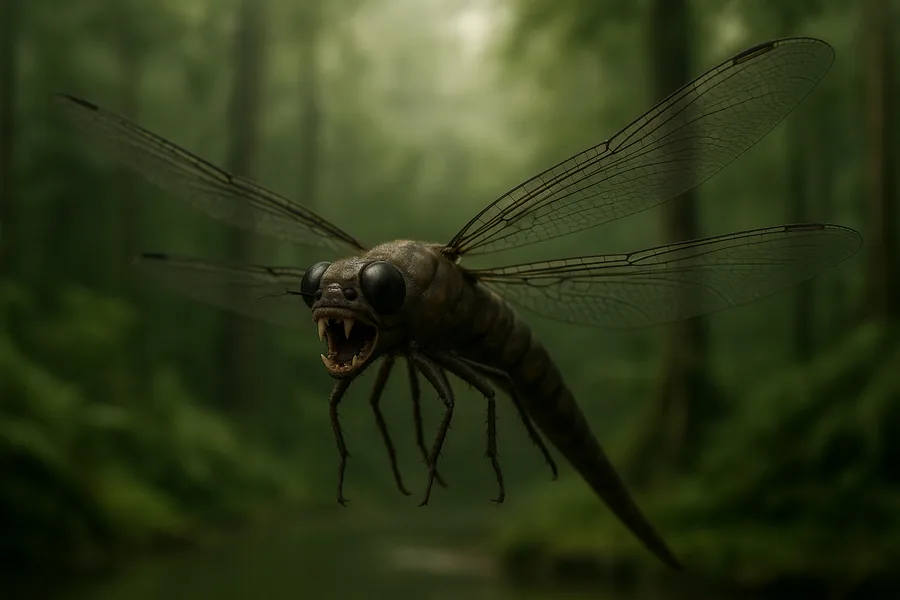 Menys The Menys is a giant dragonfly-form insectoid with broad, intricately veined wings and slashing jaws, the apex aerial predator of the jungle canopy and open river corridors. Its passing is a gust, a glint, and a shriek followed by falling bodies; it strikes from above with devastating speed, capable of clearing a dozen targets in a single pass. Even the fiercest ground creatures bow their heads when one moves overhead.
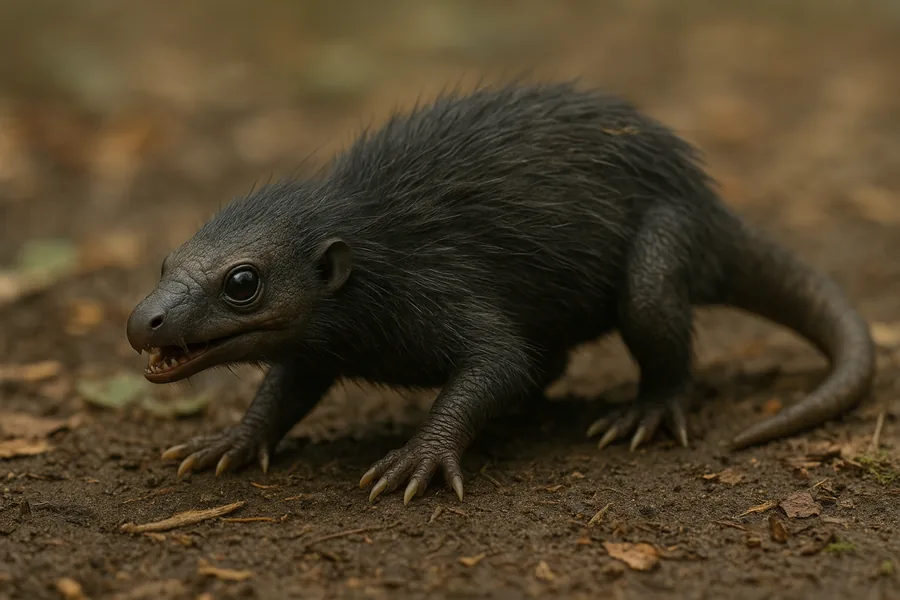 Patraghy The Patraghy is a small crawler of the forest floor and undergrowth, its slick pillow-feather coat and perpetually half-starved appearance belying a wiry, tenacious survival instinct. It steals whatever it can carry, bites what it cannot, and scurries between mudholes, fallen trees, and the territorial margins of larger beasts. A meal, a nuisance, a thief, and a survivor, the Patraghy thrives in the margins and gaps of the ecosystem.
 Raki The Raki is a small egg-laying desert creature closely related to the Socly species, nearly identical in body shape and facial features to its gliding cousins but entirely wingless. Sandy beige smooth skin, large glossy eyes, and a rounded snout give it an approachable appearance that belies an exceptional body-to-bite-force ratio; it actively hunts Ashscale Crawlers and stalks Veydran Coils several times its own size with rapid precision strikes. Widely domesticated across desert-dwelling cultures, the Raki is prized as a loyal pest-controlling house companion.
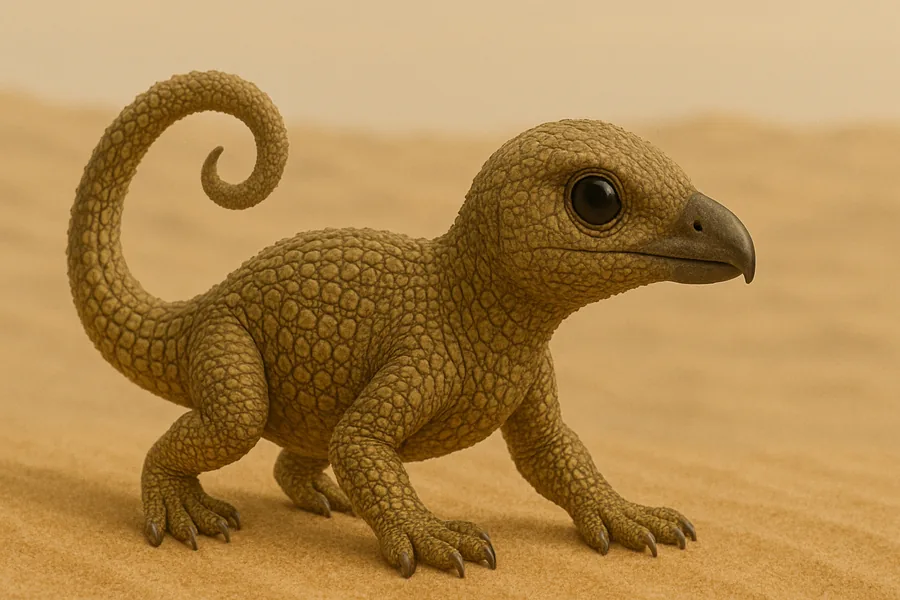 Tikrat The Tikrat is a compact, egg-laying desert dweller whose densely built body is covered in rough, overlapping scale-like nodules providing moisture retention and abrasion resistance against the wind-swept dunes and rocky flats it inhabits. Its defining feature is a strong curved beak of dark durable material, capable of slicing through fibrous plant matter and crushing insect shells with equal ease. Sandy brown colouration and sudden bursts of rapid movement with sharp directional changes are its primary defences against the many predators of the desert.
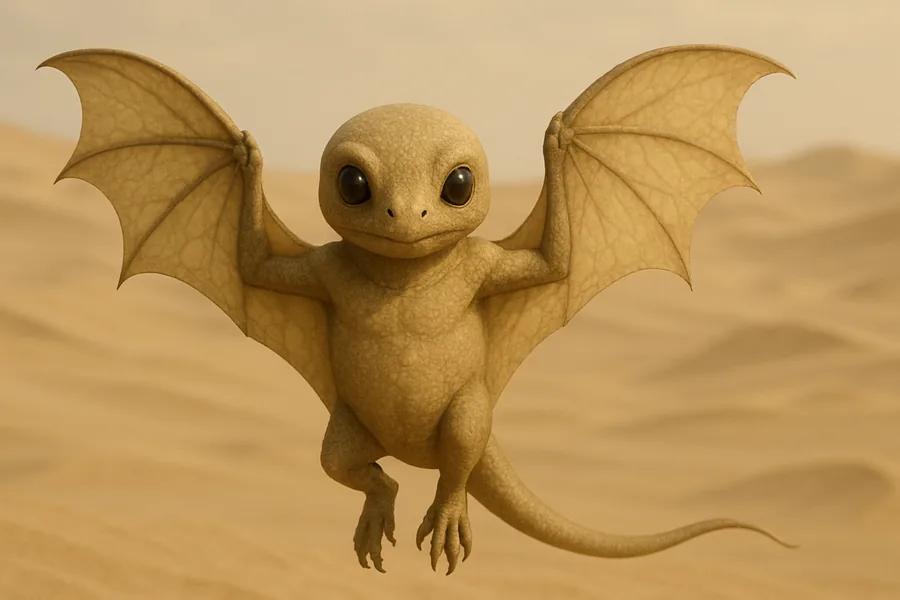 Desert Socly The Desert Socly is a small winged regional variant of the Socly species, adapted to arid sandscapes and dry steppe margins with broad parchment-coloured wings and sandy beige skin that closely matches the surrounding terrain. Wings are thin and veined, optimised for rapid escape flights rather than prolonged gliding; wing claws are reduced to near-vestigial nubs with no practical function. Highly timid and evasive, it relies on camouflage and burrowing for concealment and takes flight at the first suggestion of movement or sound.
 Forest Socly The Forest Socly is a small winged creature of dense temperate and tropical forests, distinguished from its swamp-dwelling relative by warmer brown-toned skin that blends with tree trunks, dead leaves, and underbrush. Wide amber-brown membranous wings carry functional claws at the wing joint, used to pry loose bark, dig into moss layers, and expose the insect nests that form a core part of its diet. Solitary and quiet, it navigates the complex vertical spaces of the forest in controlled descents and short glides between foraging sites.
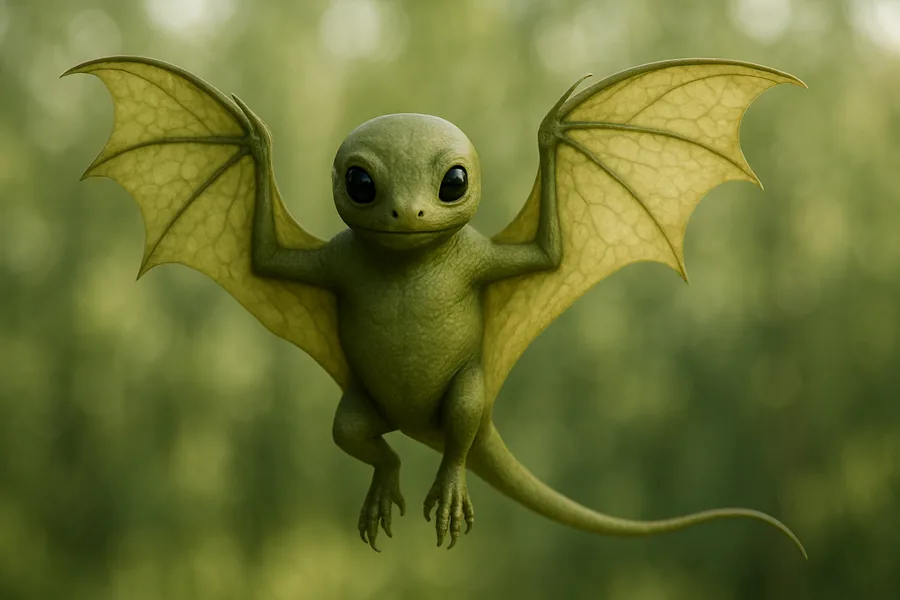 Swamp Socly The Swamp Socly is a small, fragile winged creature of dense swamp and jungle understory, its olive-to-pale-green fine-textured skin providing effective camouflage among wet foliage and standing water. Two elongated membranous wings, semi-translucent and intricately veined, enable silent and controlled flight through cluttered vegetation; the creature has no forelimbs beyond its wings, navigating entirely on two clawed hind legs when grounded. Solitary, quiet, and rarely observed in direct daylight, it is a forager of the dim and the in-between.
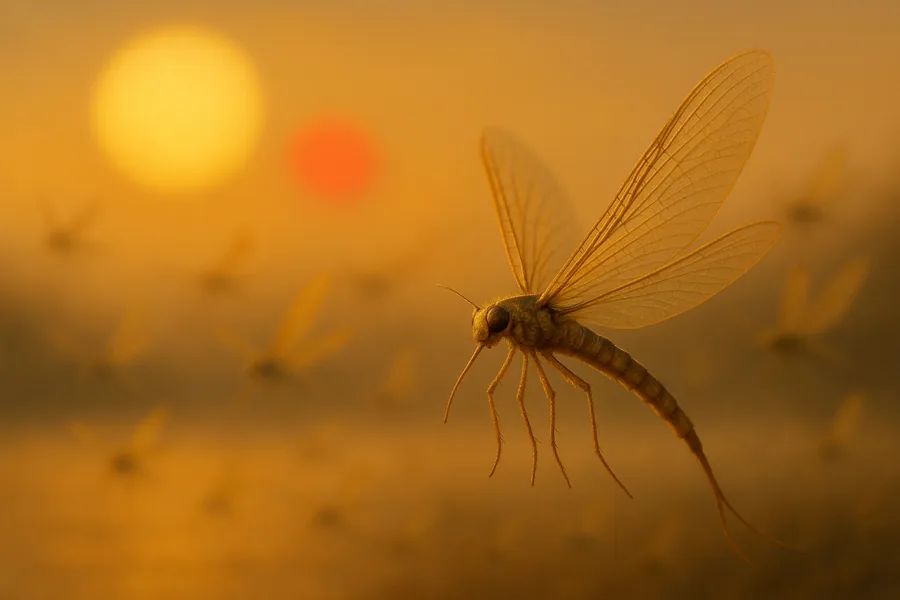 Ash Dancers Delicate, ephemeral flying insectoids that rise in golden clouds at sunset, flickering over riverbanks and waterways like dreams of warmth. Their adult lives are measured in hours rather than days, spent entirely in the brief business of breeding before they fall. In their passing beauty, they feed a hundred hungers.
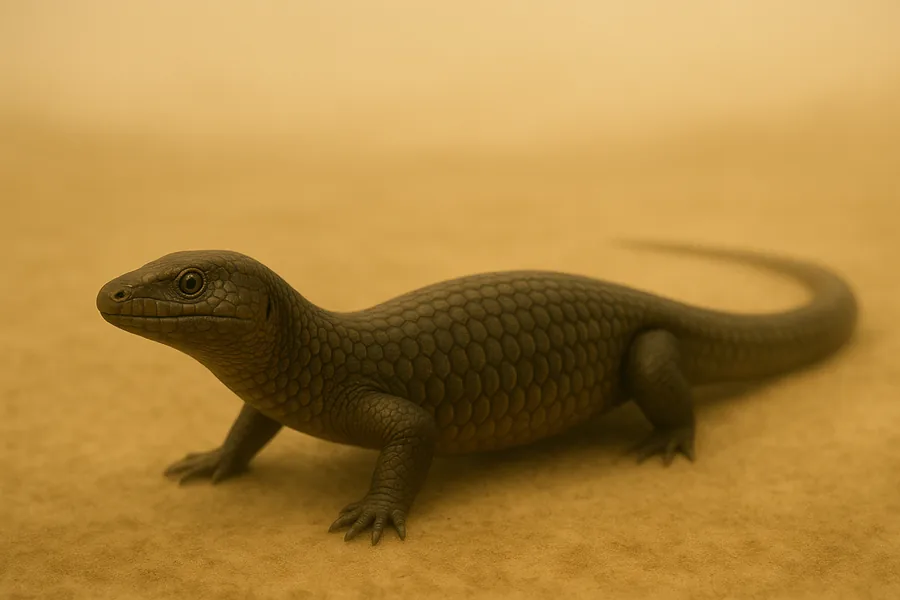 Ashscale Crawler A fast, lean creature of the cracked desert earth, bearing grey-mottled scales that blend seamlessly into broken ground and rocky outcrops. It flickers from shadow to shadow at a speed that defeats most eyes, hunting smaller crawlers and scuttling beetles across sandy margins. Itself a frequent prey of the Raki, the Ashscale Crawler occupies a precarious middle position in the desert food web.
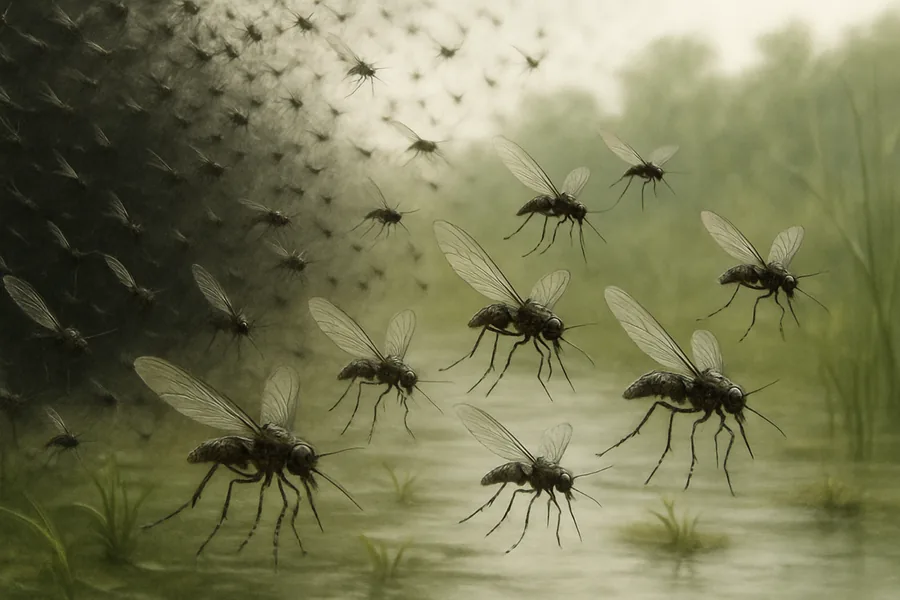 Bloodgnats Small, dark-bodied flying insectoids that breed in still water, marshes, and stagnant pools, rising in dense cloud-like swarms with a single purpose: feeding. Unlike passive midges, Bloodgnats aggressively target any creature in reach, swarming en masse until every inch of exposed skin burns. A single gnat is an irritant; a thousand can prove fatal.
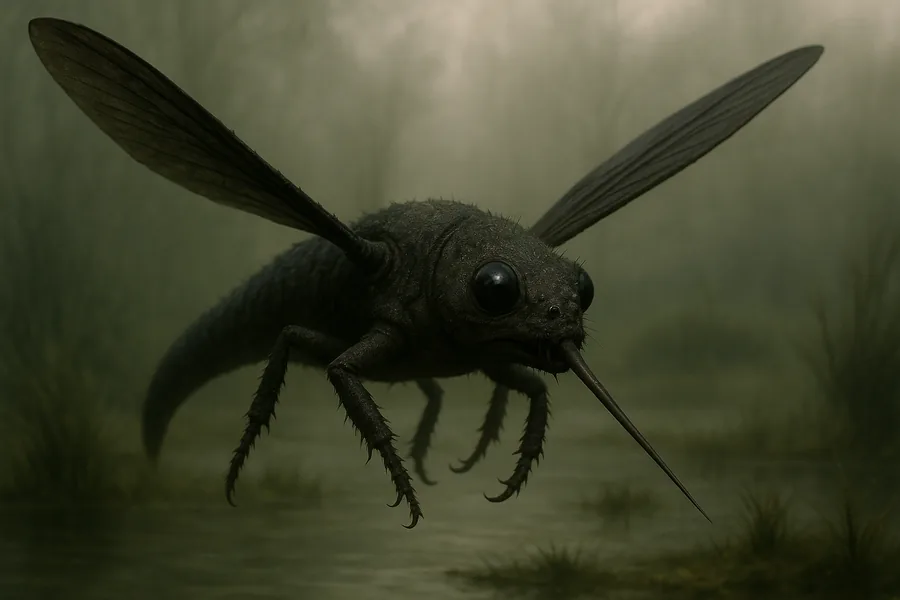 Gloomspike A thick-bodied, dark-winged insectoid that hovers low over the misted waters of swamps and boggy lowlands, armed with a stinger the length of a finger-joint. The Gloomspike is a feared swamp hazard not for the sting itself but for what follows: barbs designed to cause maximum tissue damage when extracted, leaving wounds that rot if not treated immediately.
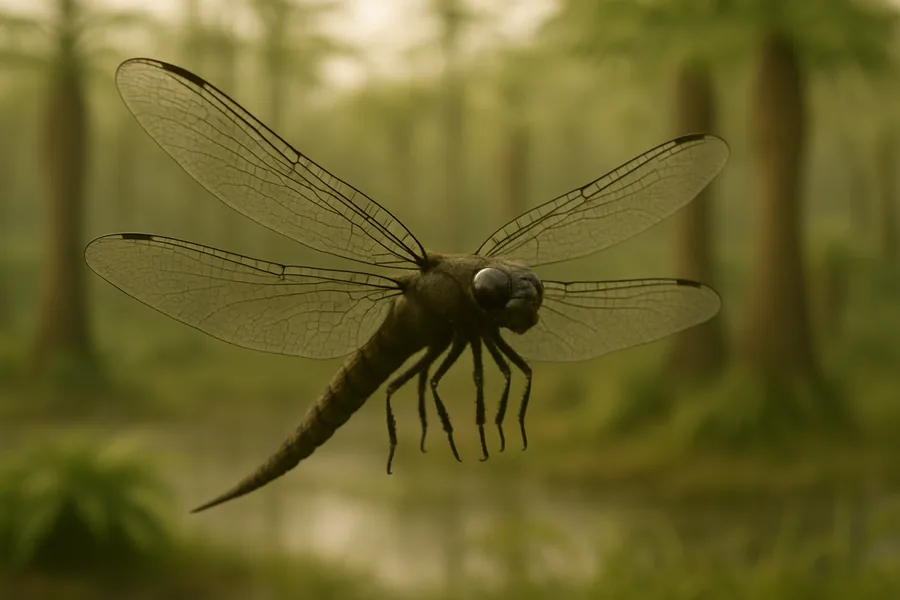 Netwing Shades Heavy-winged flying insectoids with broad, glassy wings that shimmer like broken mirrors in wet sunlight, drifting slow and deliberate through swamps and sporetree forests. They feed on sap drawn from sporetrees, and while a solitary Netwing Shade is entirely harmless, their populations can surge into swarms vast enough to blot out the sun and drain entire forest sections to bare wood.
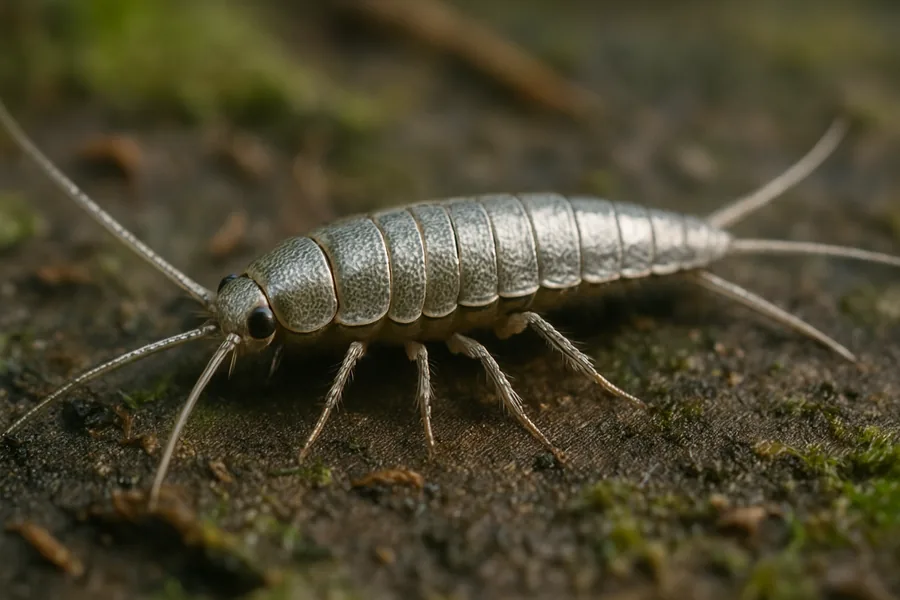 Silverbug Small, wingless scavenger insectoids that scuttle across wet stone and broken root in forests, swamps, and settlements in decline. Relentless feeders on fungus and fallen organic matter, they leave clean bone and gnawed bark where they pass. Their density in any given dwelling is considered an informal measure of that place's abandonment.
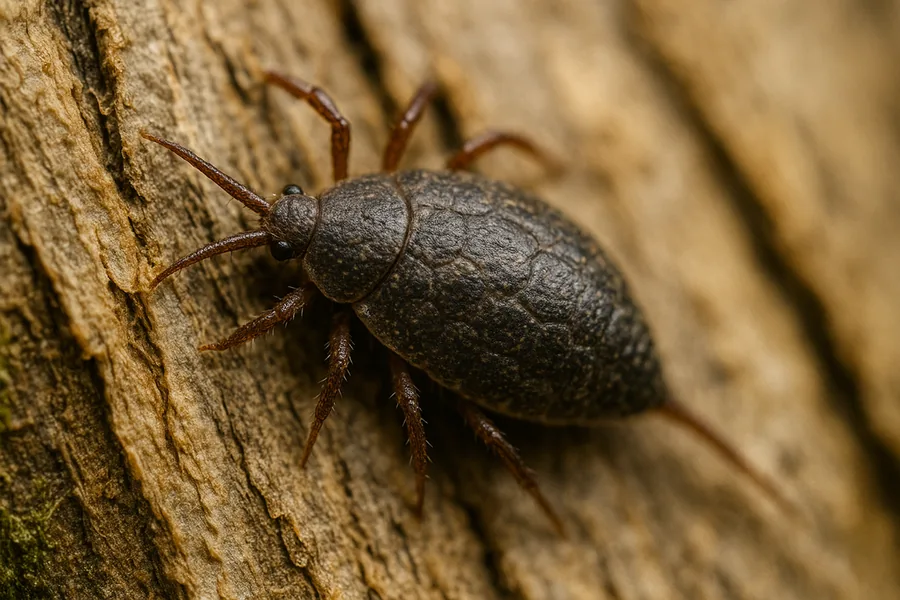 Spire-Tick A parasitic insectoid of sporetree groves, tiny enough to ride the wind and nearly invisible to the unaided eye. Burrowing into sporetree bark, it saps the tree's strength from within over extended periods, working with the slow patience of something that has nowhere else to be. Left unchecked, it is the quiet death of many a proud grove.
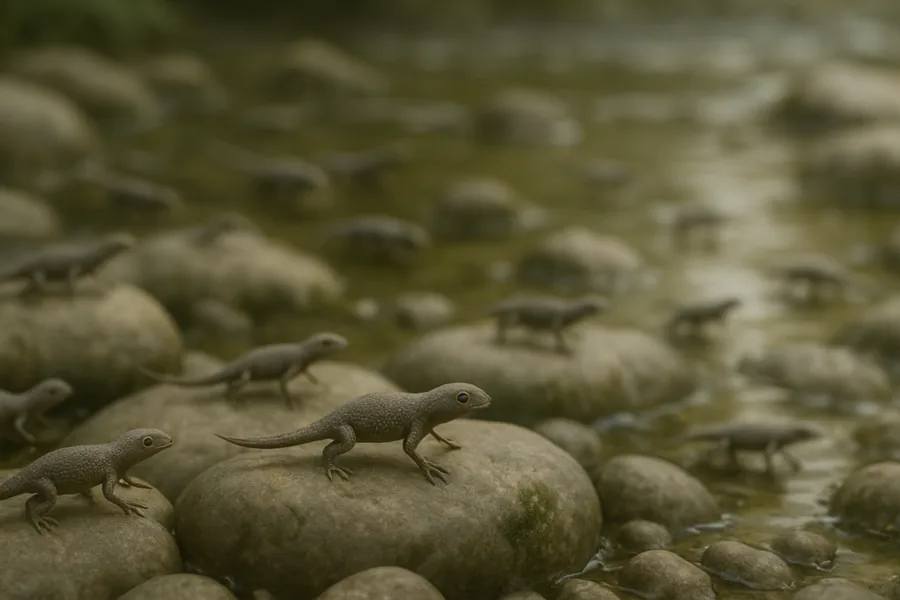 Stone Skimmers Tiny flecks of aquatic life that scatter from footfalls like shattered beads, skittering along riverstones in the shallows of riverbanks. They feed on algae clinging to wet stone, harmless and ever-present in healthy waterways. Their numbers, however, signal something less reassuring: the more Stone Skimmers crowd the rocks, the more certain it is that larger, fouler things lurk in the shallows just beneath.
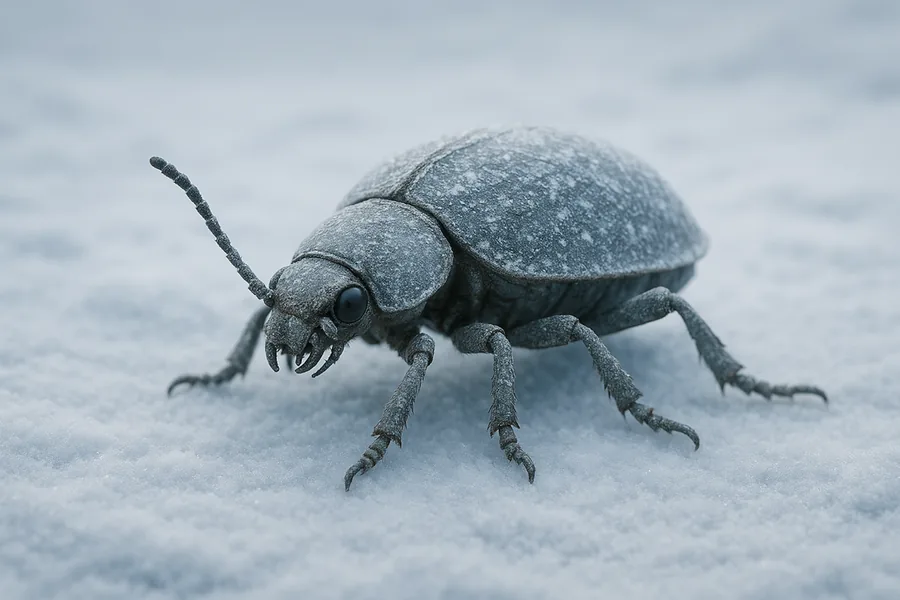 Whetbeetle A palm-sized, heavily muscled beetle bearing sharpened front mandibles capable of shearing through leaf, leather, and soft flesh. Found beneath rotting logs and in damp forest undergrowth, the Whetbeetle is an omnivorous scavenger that prefers to go unnoticed but can become genuinely dangerous when a nest is disturbed. A flooded ground writhing with hundreds of them, each snipping at boots and bare skin, is not easily forgotten.
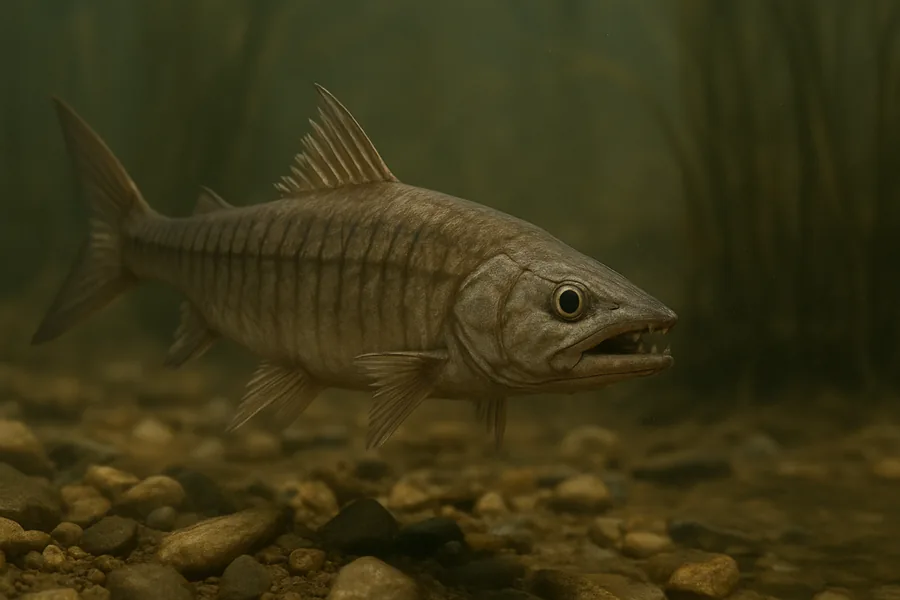 Bonefish A thin, crooked, and lean river fish that prowls slow waters and reedbeds with relentless, opportunistic hunger. Ugly to look at and worse to taste, the Bonefish is nonetheless abundant enough that the desperate fill their nets with it when leaner, better species are unavailable. It will strip a carcass clean in hours and take a toe or tail from any unwary wader who lingers too long.
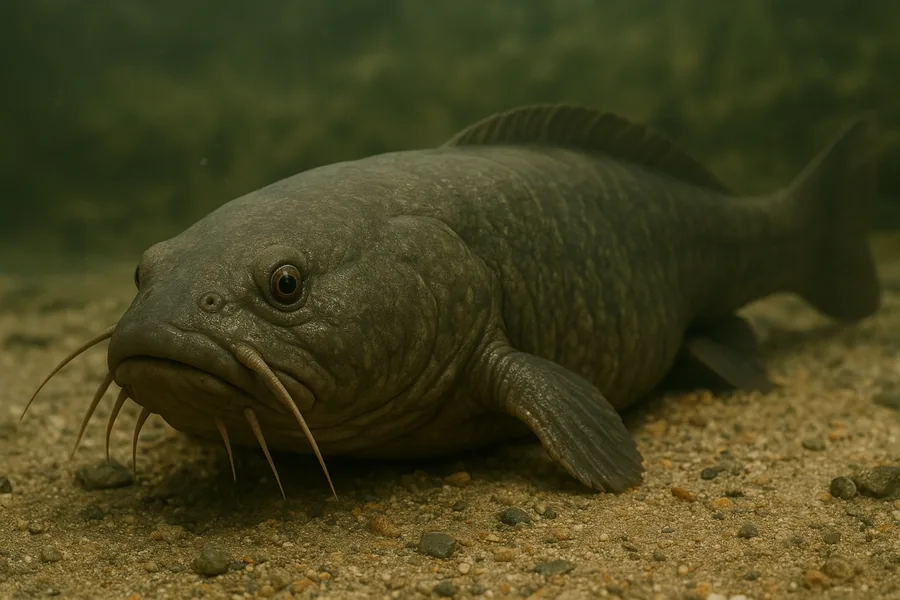 Muckfish Bloated, sluggish, and thick-skinned, the Muckfish wallows in the blackest, deepest beds of rivers where even light fails to penetrate. A bottom-feeding scavenger of considerable ugliness and negligible culinary value, it survives where finer fish cannot, a testament to the advantages of low standards and extreme hardiness.
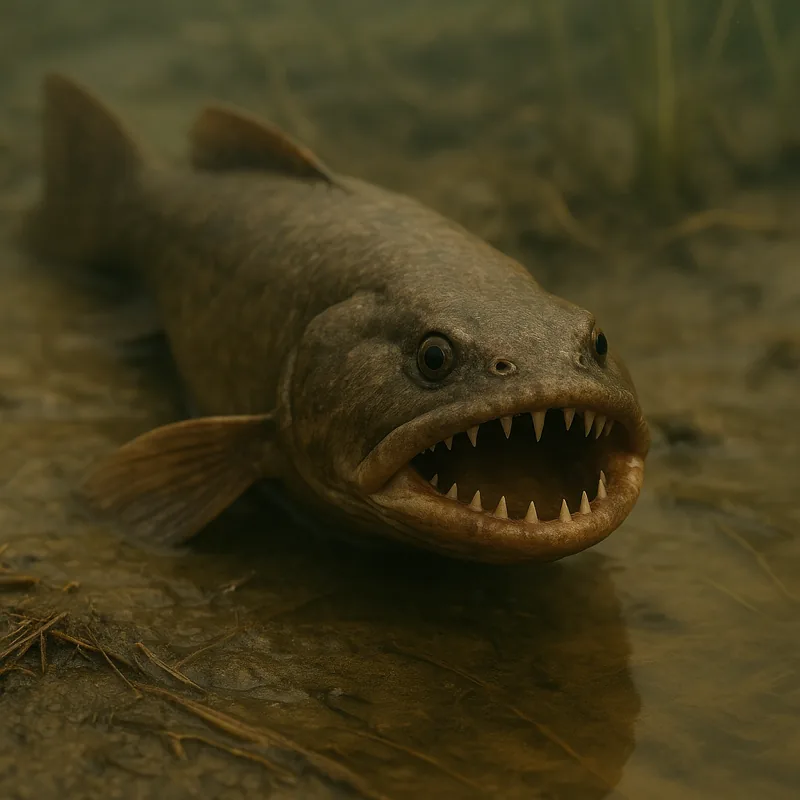 Mudtooth Essentially a squat mouth with a tail, the Mudtooth slithers through shallow marsh-channels and flood-plains on bony jaws as sharp as broken crockery. A carnivore with an endless appetite and no particular preferences, it strikes at anything smaller, slower, or unlucky enough to thrash where it lurks. Travellers crossing the flood-plains are advised to keep hands high and feet quick.
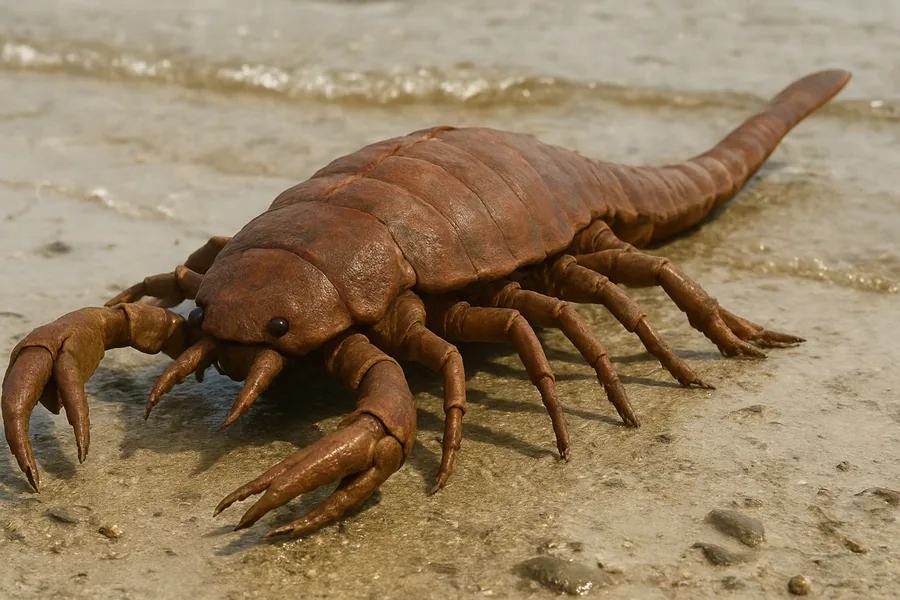 Sea Scorpion A two-metre armoured predator of shallow seas and estuaries, built from shell and rage, bearing snapping pincers and thrashing armoured limbs capable of crushing and cutting without mercy. It haunts tidal shallows and river mouths, striking at creatures on the water's edge with terrible speed. Coastal and riverine communities fear it so deeply that sailors carve charms against its name.
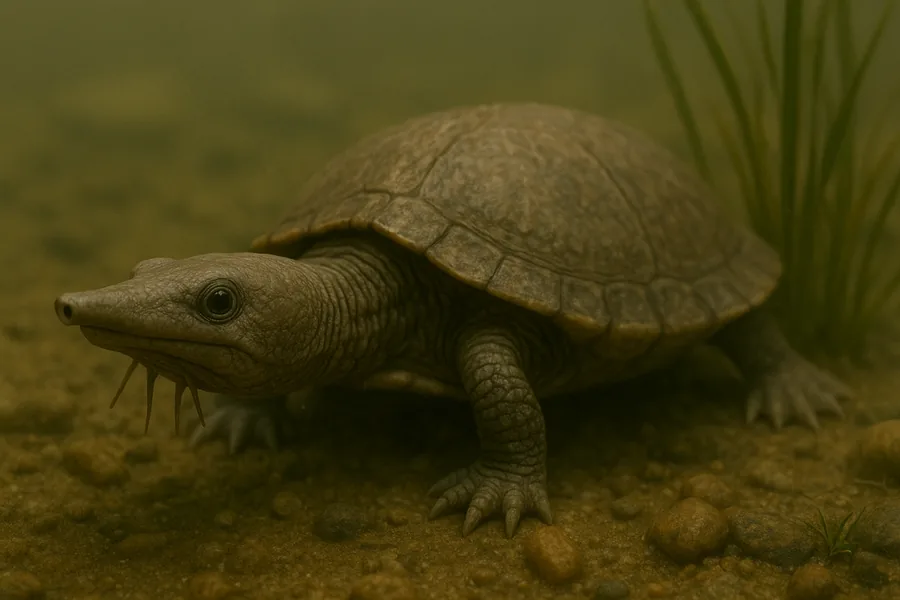 Snout-Shell A hard-shelled, slow-eyed, small aquatic creature that shuffles between stones and reeds along muddy river and lake bottoms, nosing after soft organic matter too small or too slow to flee. Harmless to most, it is nonetheless stubborn enough to chew through a dangling net or cling to an unlucky finger long after being hauled ashore. It is described as older than the river's memory.
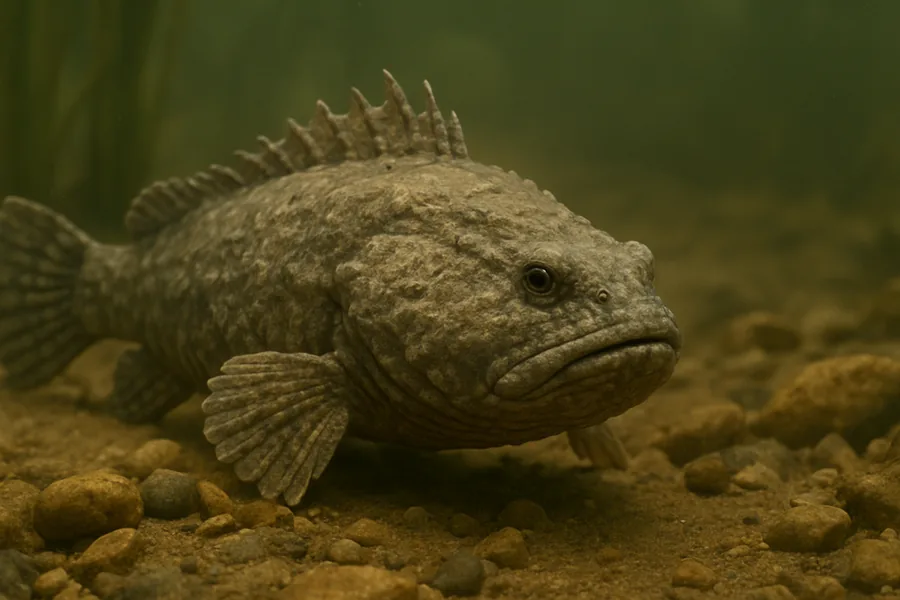 Stonefish A large, slab-like freshwater ambush predator that buries itself completely in river silt, becoming indistinguishable from the riverbed. It waits with absolute stillness for prey to approach, then strikes with a snapping lunge of devastating speed, leaving only ripples and red water in its wake. Riverfolk warn that if the stones seem to be whispering, it is already too late.
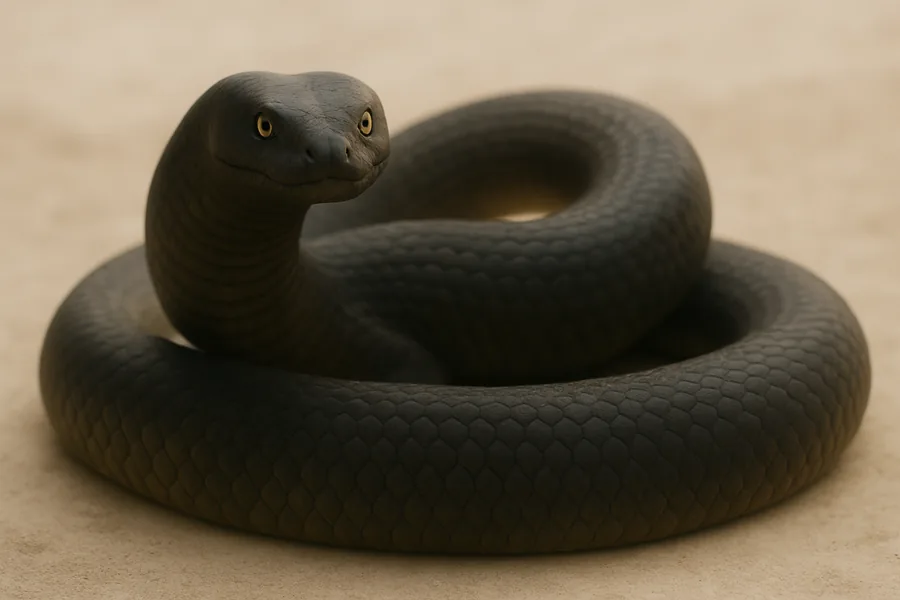 Veydran Coil Short, thick, and packed with muscle, the Veydran Coil sleeps beneath the crusted sand of shifting dunes and desert floors, coiled and waiting. It uncoils faster than a blink, striking with a crack like a snapping whip at any creature careless enough to step on the wrong patch of sand. One bite is widely considered a death sentence, and most victims never feel the strike at all.
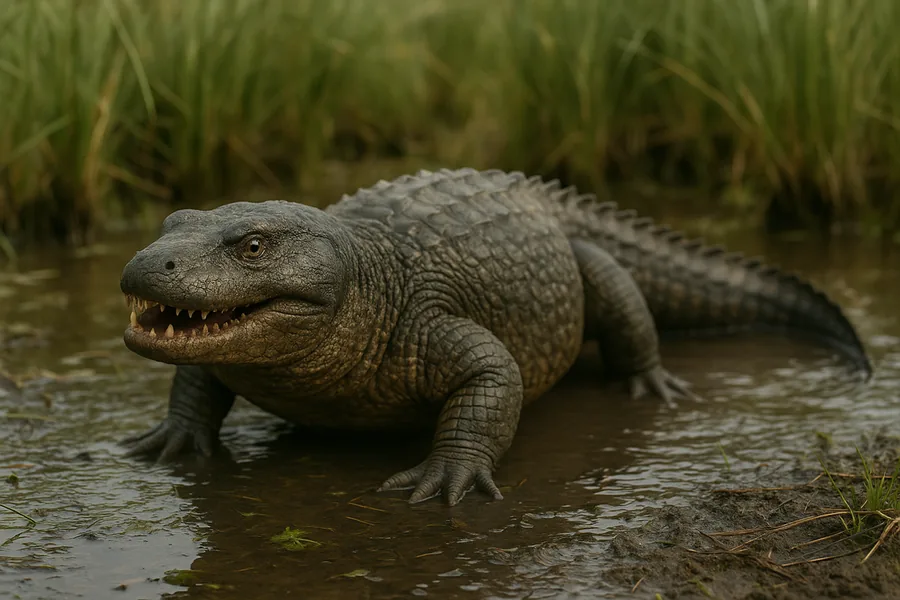 River Drake Broad of back and thick of jaw, the River Drake cleaves through flooded reeds and river channels with heavy, shield-like hide and a hunger that admits no preferences. Built for power rather than grace, it snaps through fish, mid-sized crawlers, and anything else at the waterline with equal indifference. Its temper is as short as its mercy, and riverside communities know to give it room.
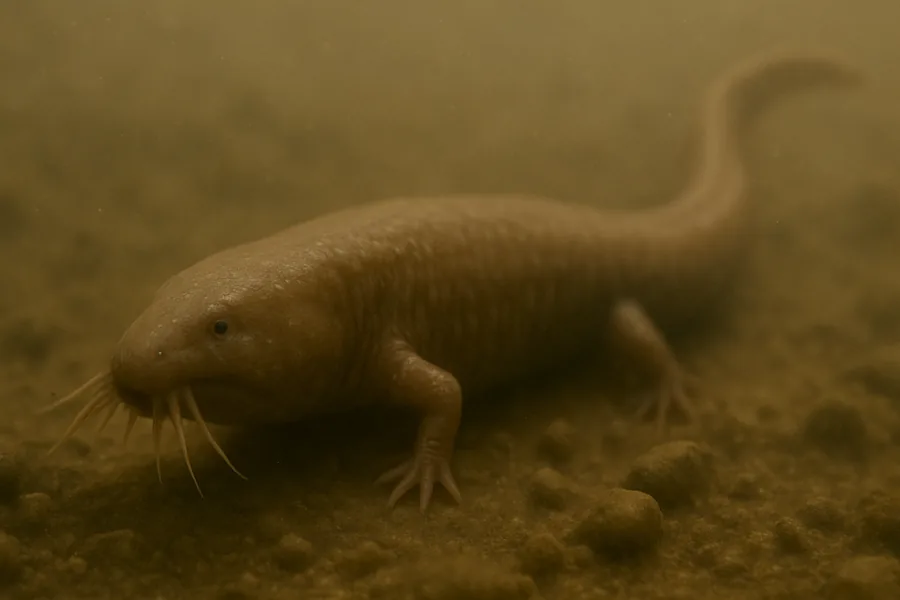 Silt-Crawler Boneless, eyeless, and featureless, the Silt-Crawler is a slip of pale flesh that writhes through the thick silt of rivers and swamps, feeding without pause on whatever death has deposited in the deep. It reduces organic matter to mud with tireless efficiency, filling the role of final decomposer in the wetland cycle. Wherever death sinks, the Silt-Crawler follows.
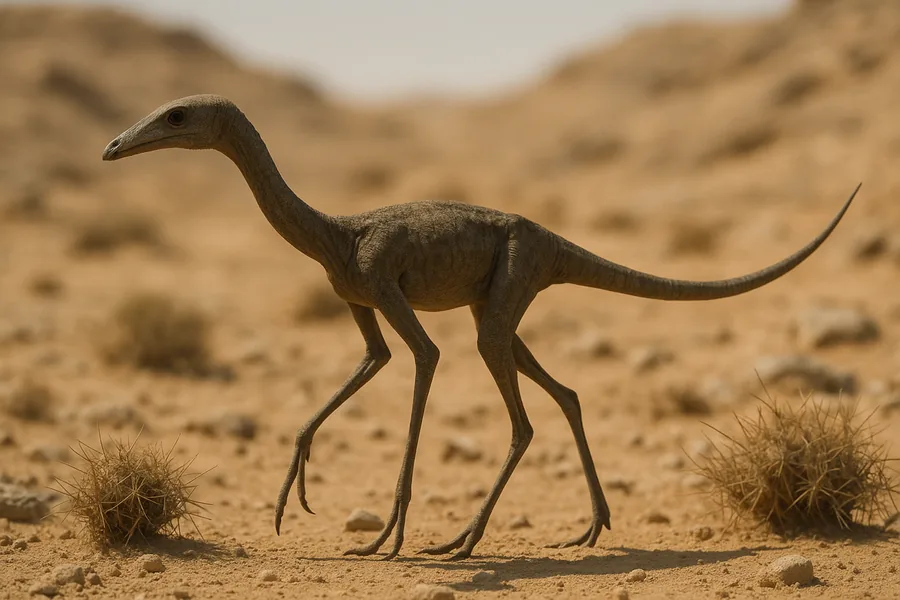 Thornstrider Thin and long-legged, the Thornstrider picks its way between broken stones and thorn-clumps of the desert on trembling limbs, every bone speaking of hunger and caution. It drinks morning dew and eats the dry spines and fibrous plants that no other creature will touch. Fleeter than pursuit and more persistent than hardship, it survives where almost nothing else can.
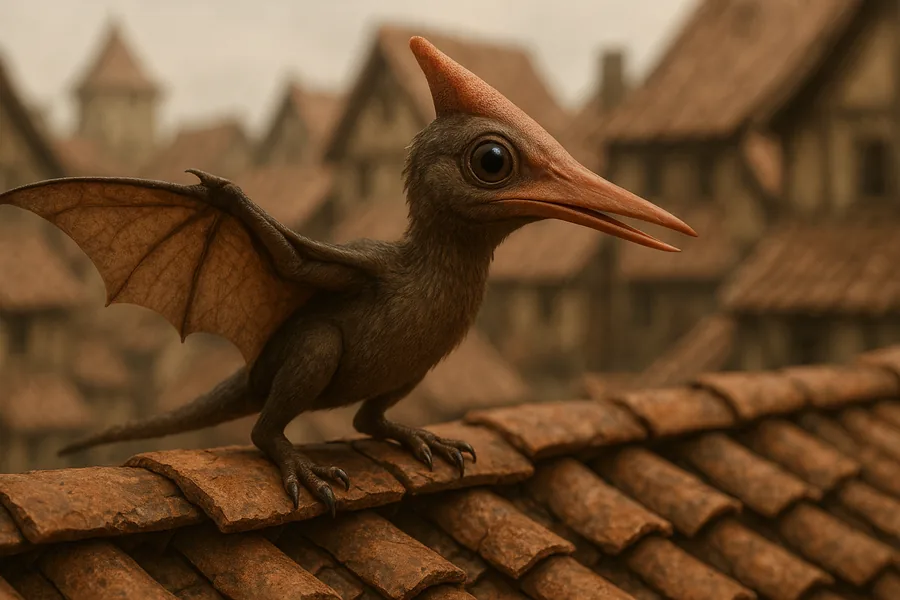 Black Whisperwings Smoke-dark, sharply veined aerial scavengers of cities and villages, the Black Whisperwings are smaller and rougher than their forest-dwelling kin, with angular bodies built for weaving through narrow alleys and collapsing rooftops. They nest in chimneys, loose tiles, and forgotten crevices, rising at dusk in chittering flocks to scour every unguarded surface for food. Where they gather, disorder is never far behind.
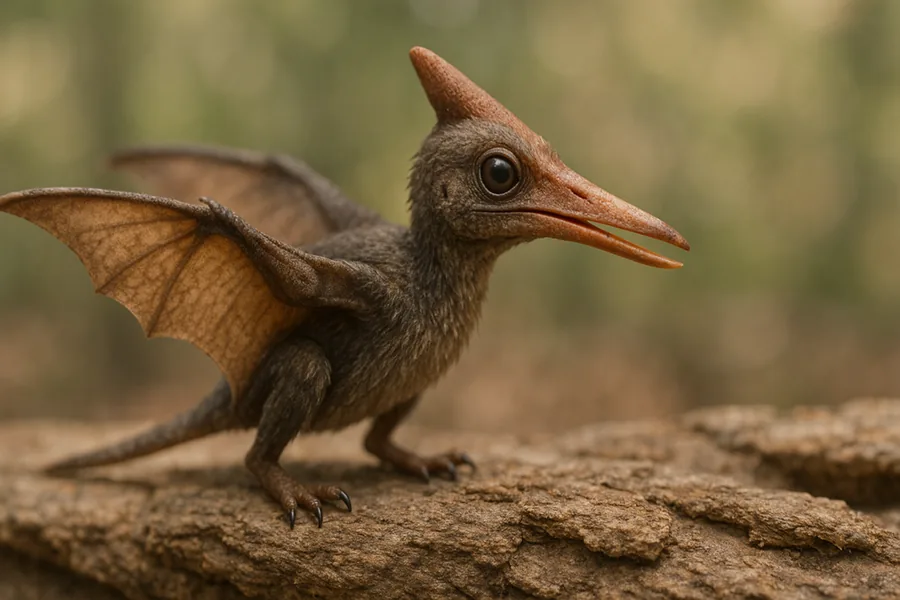 Brown Whisperwings Forest-dwelling scavenger fliers nearly identical in shape to their urban cousins, the Brown Whisperwings bear bark-toned fine feathers that make them vanish against tree trunks and mossy stones when perched. They are tireless scavengers of the cool northern forests, arriving at any carcass within minutes and stripping bone clean in under an hour. When disturbed, a roosting flock erupts like a thunderclap, darkening the canopy as if the forest had exhaled shadow.
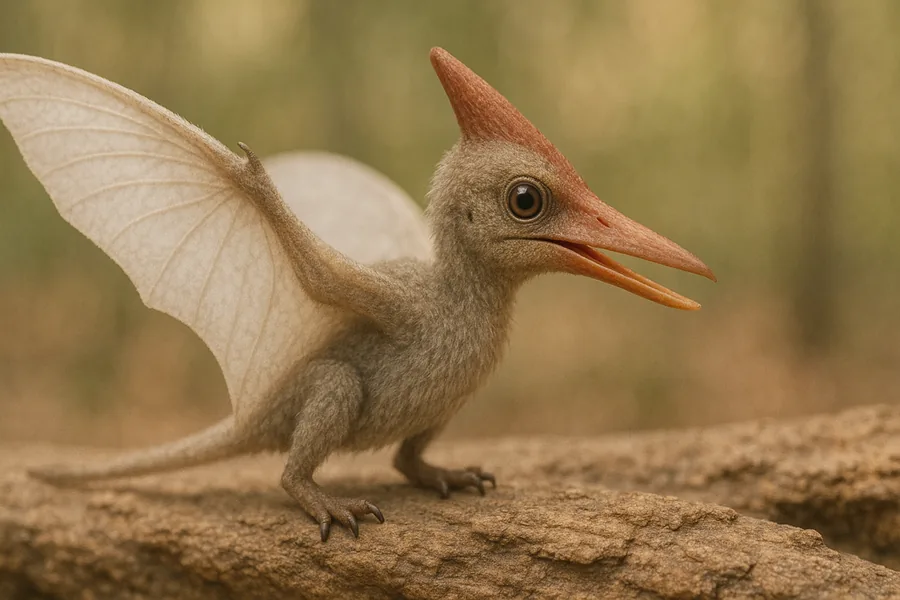 White Whisperwings Small and delicate aerial scavengers with soft silvery-grey fine feathers and nearly translucent, leaf-like wings traced with fine veins, the White Whisperwings drift from their daytime hiding places at dusk like wraiths drawn to decay. They are elusive and mesmerising, seen only by the most patient or the most unfortunate observers. Wherever they gather, death has recently passed or will soon arrive.
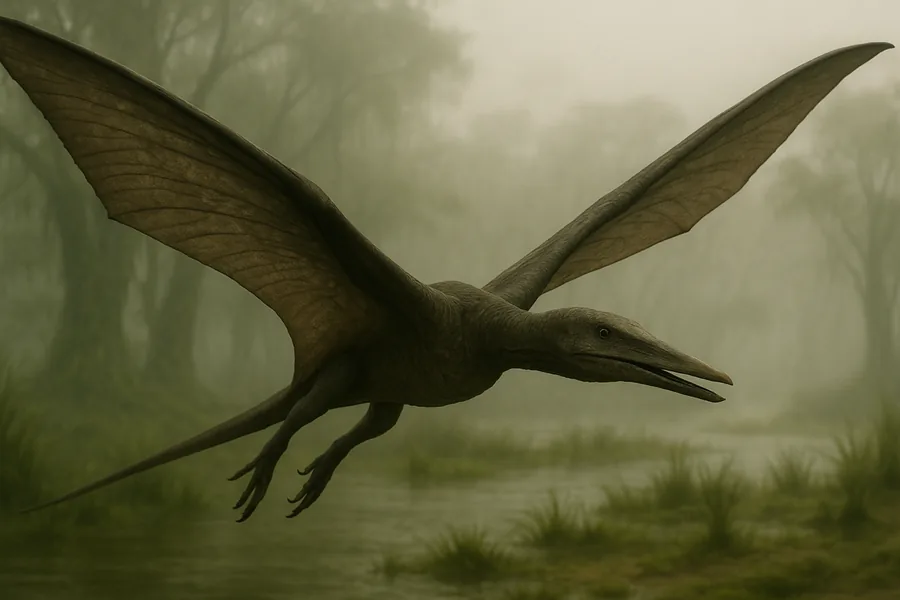 Ghost Fliers Immense aerial predators of swamps, misted lowlands, and foggy river valleys, the Ghost Fliers have vast wingspans and wings stretched taut as old paper. They produce no wingbeat sound whatsoever, drifting through mist with eerie silence and watching for movement below. Their presence is heralded only by the sudden, complete silence of every smaller creature in the canopy.
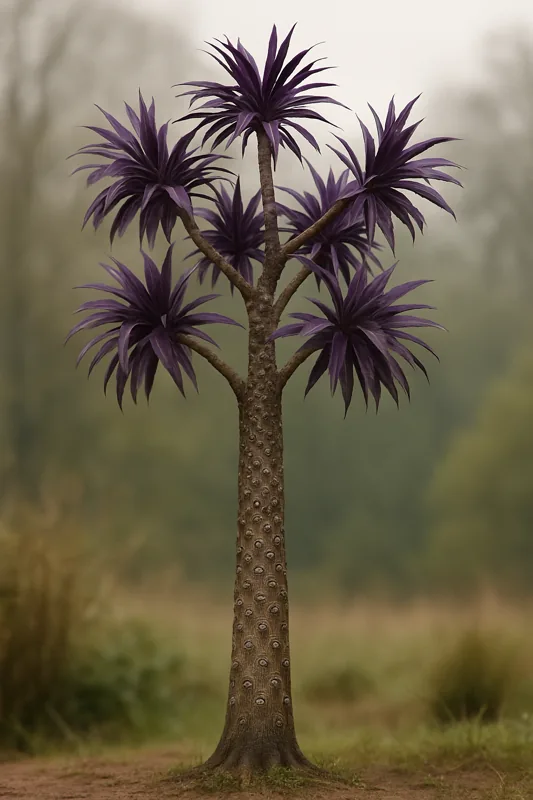 Arag Tree The Arag Tree rises in a tall, straight column armoured by spiralling whorls of bud-scars, its lance-shaped crown shifting from deep green to blue and violet fire under the full blessing of Namii. It thrives in the warmer river deltas and misted lowlands of Northland, growing most lushly where floodplain soils and sunlight meet in balance. During the Blooming, the tree unfurls wide-lobed spore-bearers, luminous to the touch, that pass for flowers to the uninitiated.
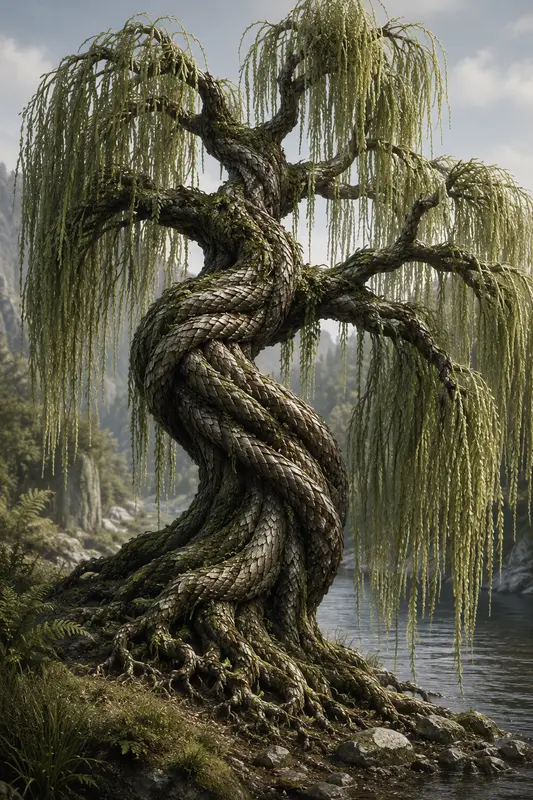 Birsh The Birsh is the crooked water-tree of Baramma's riverbanks, a low, broad-shouldered species whose twisted trunk grows as if wound from rope, every fibre locking spirally into the next. That coiled grain makes Birsh wood all but unsplittable and absurdly strong for its weight, and the gnarled elders stand the winter floods and the grinding ice without bowing. From the crown hang long curtains of pale green strap-fronds that trail in the current wherever the tree leans out over the water, and the bark parts in small diamond scales. Nothing else on the river looks like a Birsh, and nothing on the river is trusted like one.
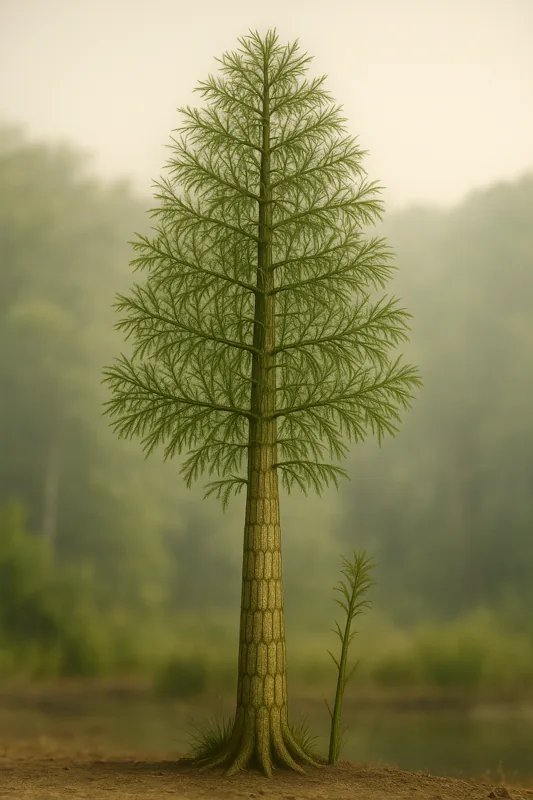 Caltree The Caltree builds itself joint by joint, its furrowed, ribbed trunk rising in deliberate tiers like a ladder pressed into living earth. From every node fans a spoked halo of broad, paddle-shaped leaves, and mature specimens may stand between five and twenty-five metres, elder giants said to brush the low clouds. So widespread are Caltrees across Elshore that marshers and meadow-folk take a sprouting sapling as a sign of plenty.
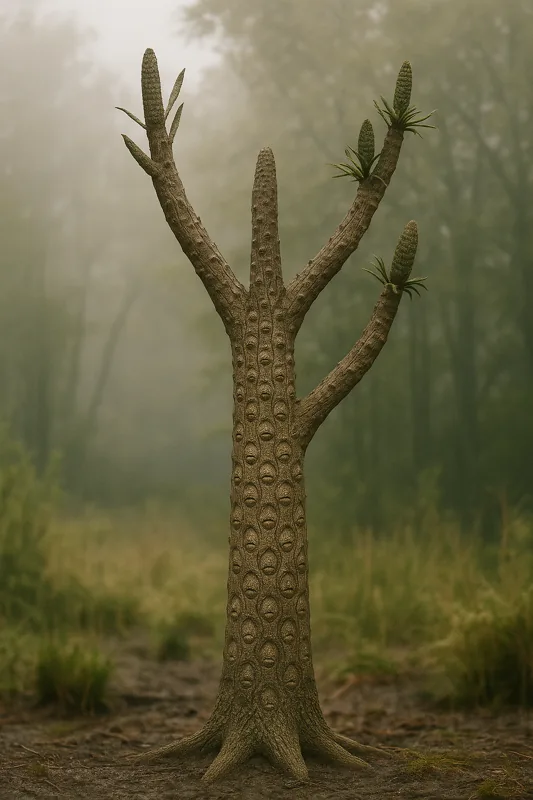 Cigtree Tall, bare, and solemn, the Cigtree is marked along its trunk by spiralling eye-shaped scars where old fronds fell away, forking only far above the ground into great reaching arms that end in clusters of stiff spear-leaves around thick, conical spore-crowns. It favours damp lowlands and mist-veiled woods where air hangs heavy with hidden water, undisturbed by storm or drought. In the gloom of the Land of Green Shadows and the foothills of the Bridge Mountains, a Cigtree rising from the fog is said to mark places where the boundary between waking and dreaming runs thin.
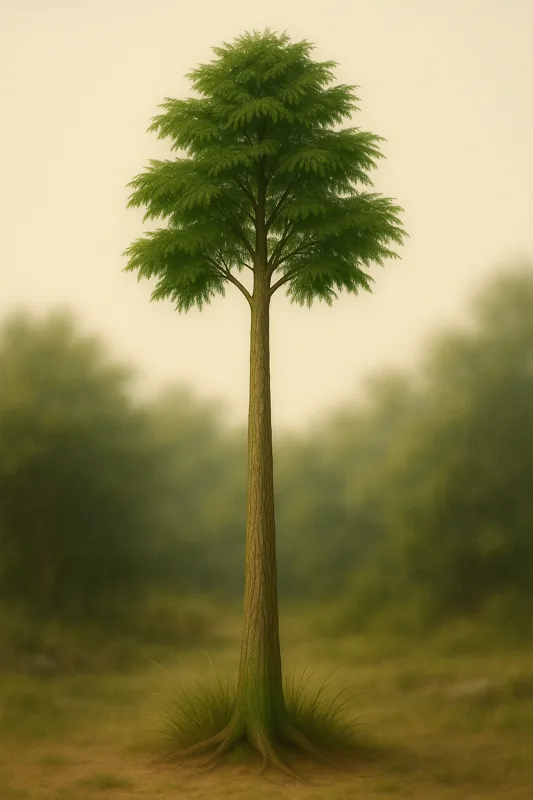 Cordae Tree The Cordae Tree is a needled, narrow-crowned species standing between three and twelve metres, its resinous bark rising in silence on broken slopes, rocky passes, and the misted folds of Elshore's great mountain ranges. It gathers in enduring groves where roots can bite deep into thin mountain soils and needles drink the cool air, rare near river basins or dense swamps. Travellers speak of stumbling upon Cordae groves where no path leads, as though the trees themselves wander during the long turning of seasons.
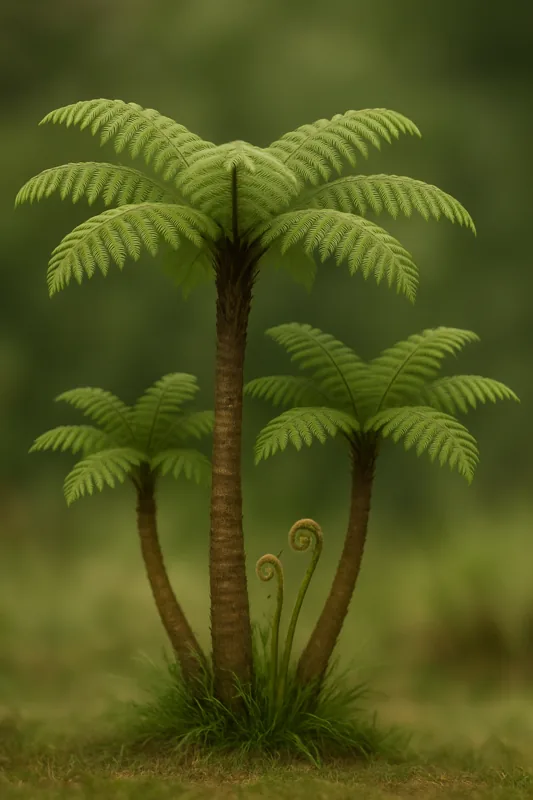 Frondwood The Frondwood is a tall, slender tree whose smooth fibrous trunk is crowned with great vaults of feathery fronds, each leaf laced finer than the weave of ancient banners. It grows across the mist-fed forests of the Land of Green Shadows and along the damp shoulders of the Bridge Mountains, wherever water breathes from the soil and sunlight drips through the mist. Beneath the oldest Frondwoods, it is said the seasons move slower, unwilling to disturb the dreaming trees.
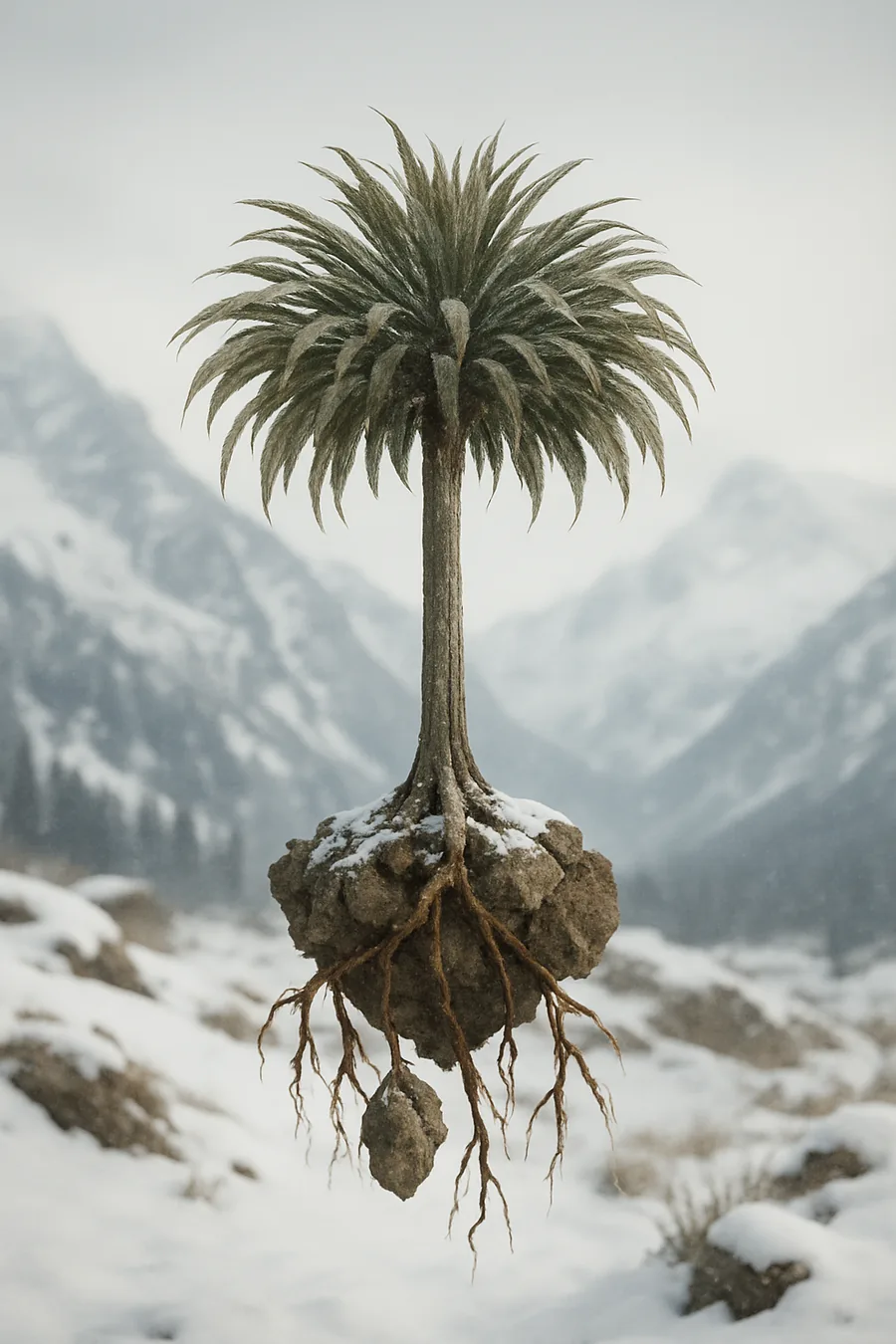 Larg Tree The Larg Tree begins its life rooted in iron-rich soil but draws veins of metal and magnet-stone into itself over decades until its trunk and roots become magnetised and the tree slowly rises, trailing clods of earth as it lifts a Maan's height or more above the frozen ground. Mature groves drift above the upland ore-fields of the Bridge Mountains and Frozen Highlands like floating islands of frost-dark bark and whispering leaves, rare and treasured as the burial places of heroes. In old Largtree groves, the accumulated magnetic fields are said to whisper and sing as they stir the dust.
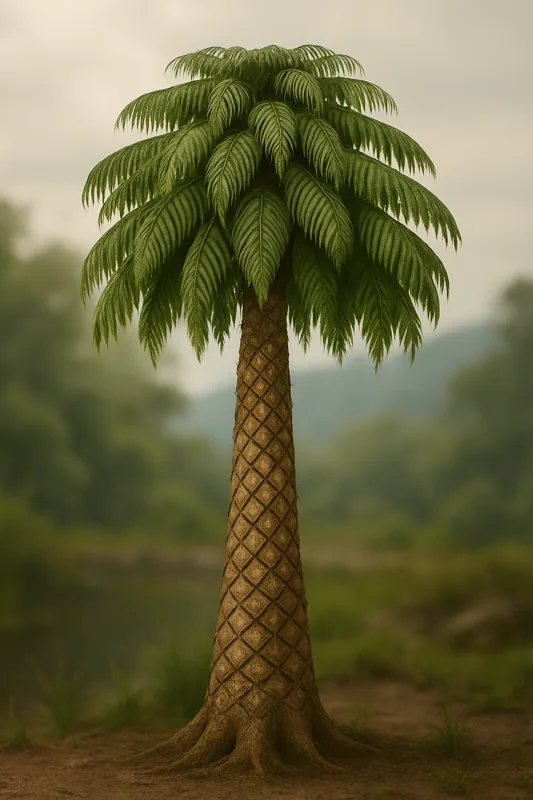 Pik Tree A towering marshland species reaching up to thirty metres, the Pik Tree is clad from base to crown in overlapping scale-plates of wood and fibre fitted together with architectural precision, its dense pendulous fronds swaying far above the waterlogged ground. It roots in water-saturated terrain across the wetlands of Northland, its sprawling roots knitting into mats that rise above the mire and create floating gardens for smaller life. When noon winds pass through a Pik stand, the rattling of their scales is said to weave a song that draws rain from the veiled sky.
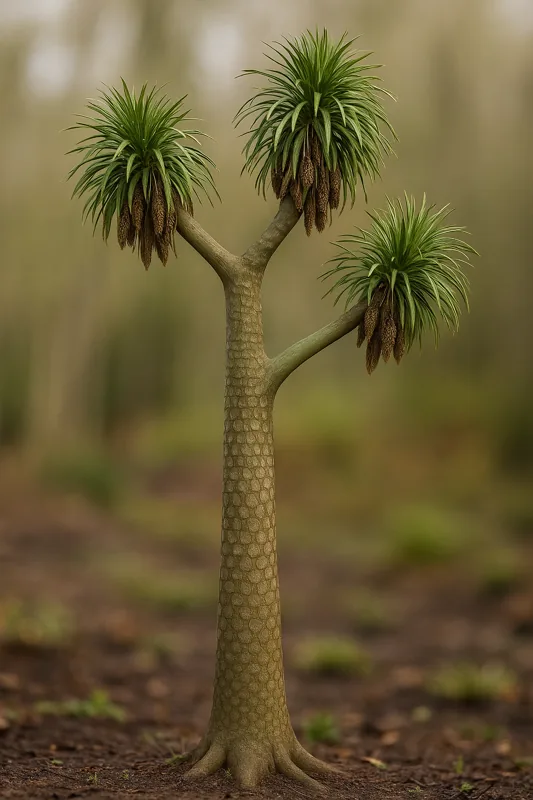 Sigill Tree The Sigill Tree rises between twenty and thirty metres, its massive trunk clad in tessellated hexagonal bark-plates sealed to one another as though the world had stamped its mark there, its great clean limbs crowned with lance-shaped leaves from which heavy spore-clusters dangle like tassels on a king's robe. It favours silty riverbanks and floodplain fields, forming sparse, dignified stands where each tree stands spaced like a sentinel keeping solemn vigil. To the folk of the Sunfields and Baramma alike, a grove of Sigill Trees marks final blessings: an end sealed, a beginning waiting to be sown.
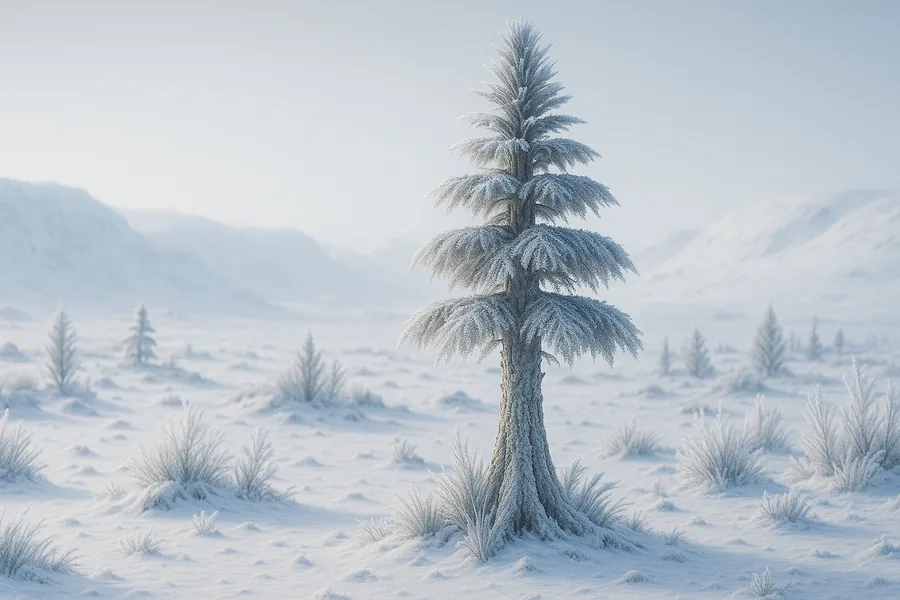 Harrowind Tree The Harrowind Tree is a slow-growing columnar species of three to eight metres, built from concentric lignin-glass composites that grant extraordinary frost resilience, its needle-like strap leaves spiralling tightly in a dark, almost metallic sheen of silica and anthocyanin. It serves as the keystone canopy species in highland and geothermal-adjacent cold forests, rooting deeply into rocky, frozen soils too wind-battered and cold for most other tree species. As a windbreaker and thermal moderator, it shelters understory plants and creates habitable microclimates in otherwise inhospitable terrain.
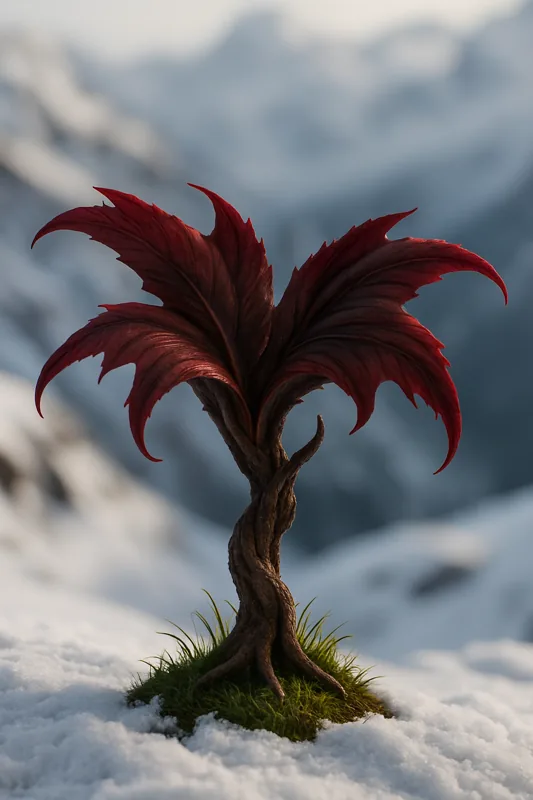 Blood Isuule The Blood Isuule rises from broken soil like a wound refusing to close, its twisted fibrous stems coiling upward into wide, blood-coloured serrated leaves that dry and claw inward at the outer edges as the plant matures, sometimes piercing its own heart and casting the broken shell to the wind as a new dispersal vessel. It thrives in disturbed, blood-soaked, or ruinous ground across Northland, carpeting old battlegrounds, grave-fields, and the sites of forgotten betrayals. Every part of the plant is toxic, and its carnivorous lure at the base draws both insects and, by scent, larger and far more dangerous creatures from the surrounding wilds.
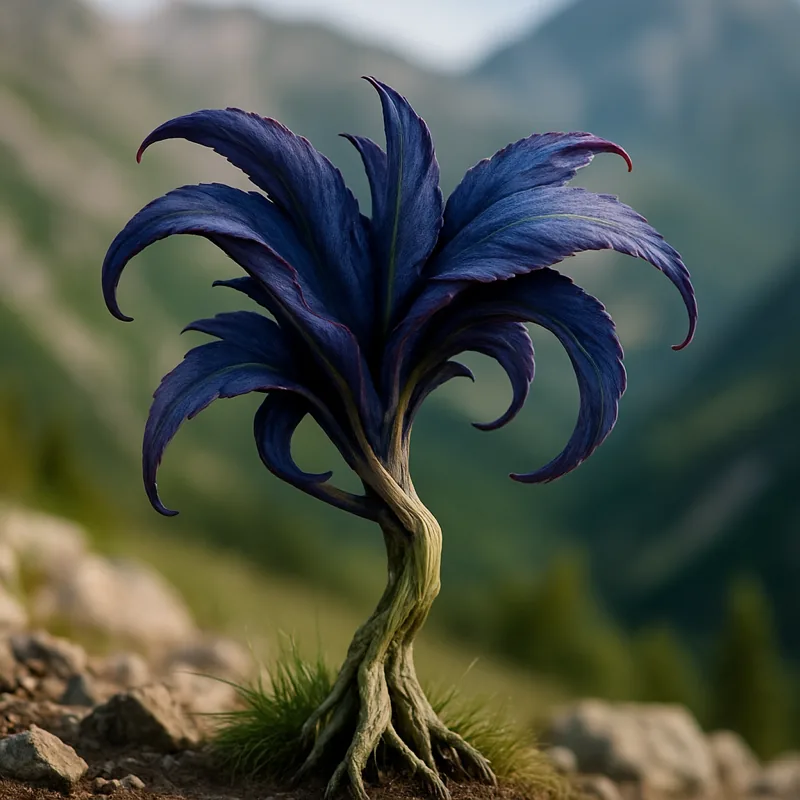 Blue Isuule The Blue Isuule rises with flowing, spiralled grace along temperate mountain slopes and sheltered ridges, its woody trunk splitting into smooth, muscular branches from which great arcs of indigo-to-violet leaves spill, broad and thick with a gloss that silvers under Namii's light and deepens to crimson at the wind-hardened edges. Unlike the strict symmetry of the Red Isuule or the ragged wildness of the Blood, the Blue's growth is uneven and beautiful, shaped as much by wind and slope as by its own deep patience. It cannot survive true winter snows but endures mild frost with stoic strength.
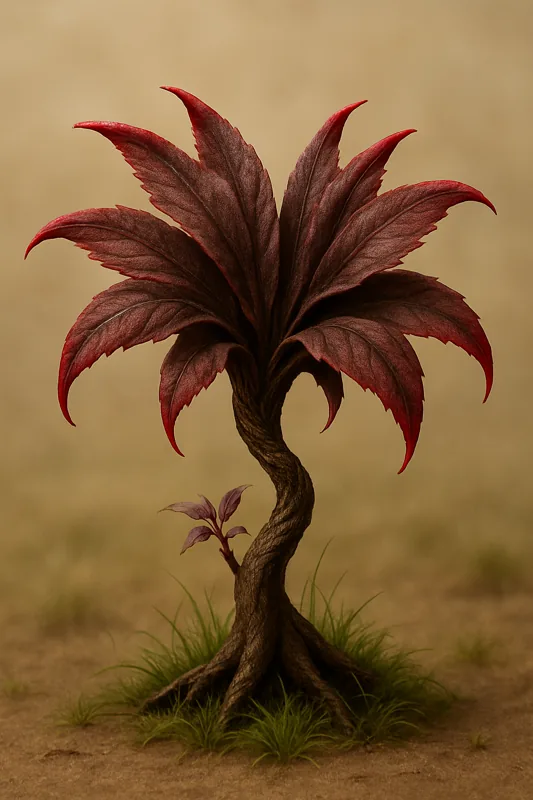 Red Isuule The Red Isuule grows in quiet, solemn grace, its thick twisted stem rising into a broad crown of flame-shaped leaves that arch in symmetrical, orderly tiers, shining dark crimson at the centre and fading to blood-orange at the tips. It flourishes across the warmer river terraces, lowland plains, and mist-fed deltas of central Northland, drawing all sustenance from the richness of the soil rather than from prey. Frost shrivels its stems and heavy snows kill it root and crown alike, keeping it entirely absent from the cold uplands where the Blood Isuule thrives.
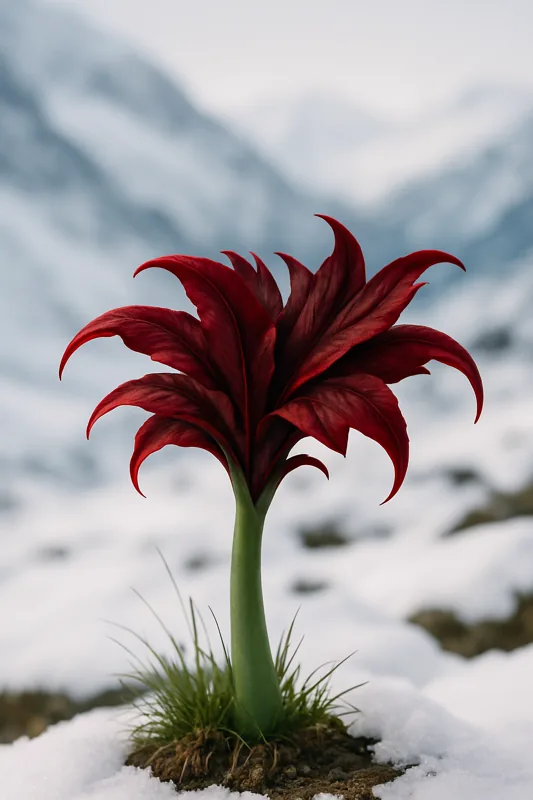 False Isuule The False Isuule stands tall and eager, cloaked in a beauty not truly its own: its smooth, slender green stem lacks the twisted woody hardness of the true Isuule lines, and its feather-veined, fern-like fronds lack the iron stiffness of its deadlier cousins. From a distance a young traveller might mistake it for a Blood or Red Isuule until they draw close and see the gentle sway, the pliant stalk, and the delicate weave of its leaves. It grows widely across temperate floodplains, foothills, and river-meadows, where mist and sunlight share the sky equally.
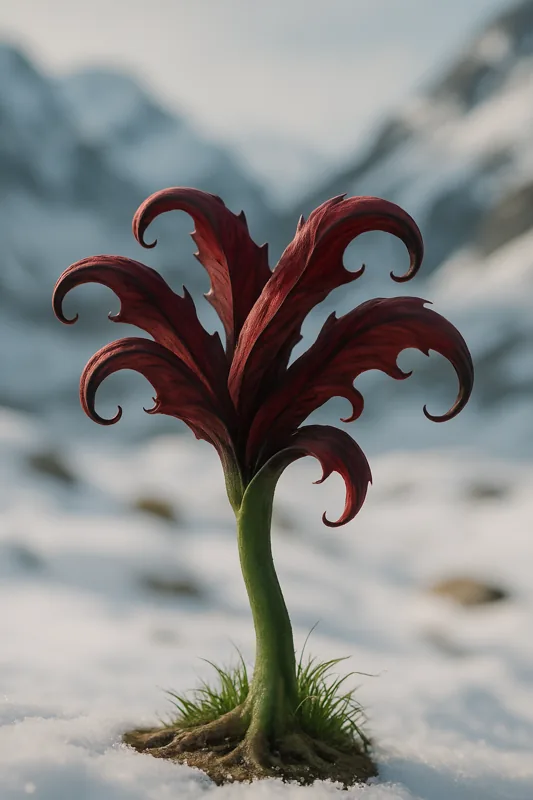 Garden Isuule The Garden Isuule is a crafted beauty born from centuries of soft taming, its smooth round stem anchoring a crown of deep crimson fronds whose blades curl outward in elegant, symmetrical spirals, precisely layered and richly textured to catch and hold the light like dark silk. Bred deliberately from ancient strains of False Isuule by Annil and Baramma cultivators, it mimics the dramatic forms of true Isuule without the poison, wildness, or sorrow. It does not survive wild: without tending it withers under frost, drowns in flood, or collapses under the weight of neglect.
- Olhonel The Olhonel rises like a shard of living crimson from the white breath of the snowfields, a single supple stalk ringed by high-clinging roots that grasp the earth like forgotten fingers, its crown spilling long arcing fronds of deep maroon to blood-black that curl upward in serrated, feathering spirals. Though technically a sporeleaf fern, the folk of the high valleys and frostward passes call it a flower, for under the twin suns its blooms catch and scatter light like broken wine on a blade. It clings to the cool slopes, frost-scrub plains, and lower snowy ridges of Northland's mountainous spines, surviving where mist rises thick but the snow does not stay forever.
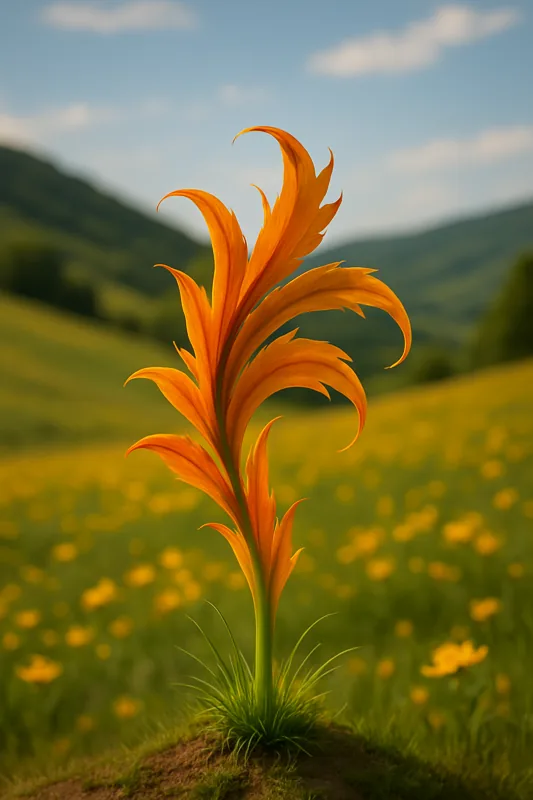 Flame Olhonel The Flame Olhonel rises like a living sunburst across northern valleys and high meadows, its tall green stem crowned by vivid golden-orange fronds that curl upward and outward like tongues of fire caught in stillness, each blade broad and thin, veined faintly in bronze and glowing in morning light as if lit from within. It grows across temperate foothills, warm upland meadows, and mid-altitude slopes of Northland, thriving where winters are mild and frost touches only lightly. In Lifebloom winds, whole slopes shimmer like golden rivers spilling across the earth.
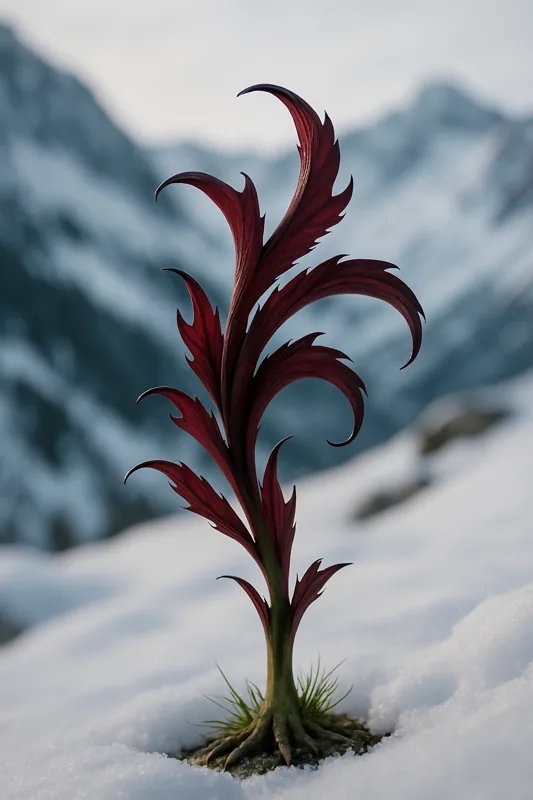 Rust Olhonel The Rust Olhonel grows lean and defiant among snow and stone, its deep green stem bearing fronds of dark rust-red and bruised violet that curl into long, narrow hooks against the cold, each blade tougher and thicker than those of its golden Flame cousin, matte and armoured against the whisper of frostwinds. It thrives across the deep south of the world where frost does not leave for half the year, painting the Frozen Highlands, the Windshield Edge, and the wind-flensed plateaus of Maanamodilia in tones of blood and dusk. When twilight leans over the southlands, fields of Rust Olhonel burn low and fierce against the snows.
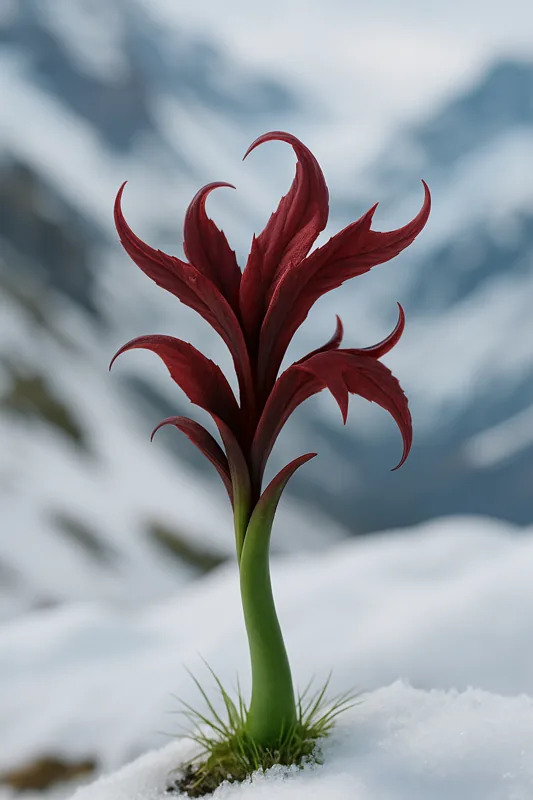 Red Tulonia The Red Tulonia rises like a crimson breath frozen into stone, its long supple green stalk bearing fronds of deep blood-red veined faintly with black, each leaf curling in tight, defensive spirals against the chill, the oldest plants growing twisted as if bowing low beneath the endless southern winds. It thrives only in the deep southern realms, anchoring itself into ice-rimed soils between long winters that break stone and bone alike across the Frozen Highlands, the Windshield Edge, and the cold-breath fields of the Ortomyack Mountains. In snowbound fields under the cold twin suns, it seems less a plant than a slow flame trapped beneath the weight of the sky.
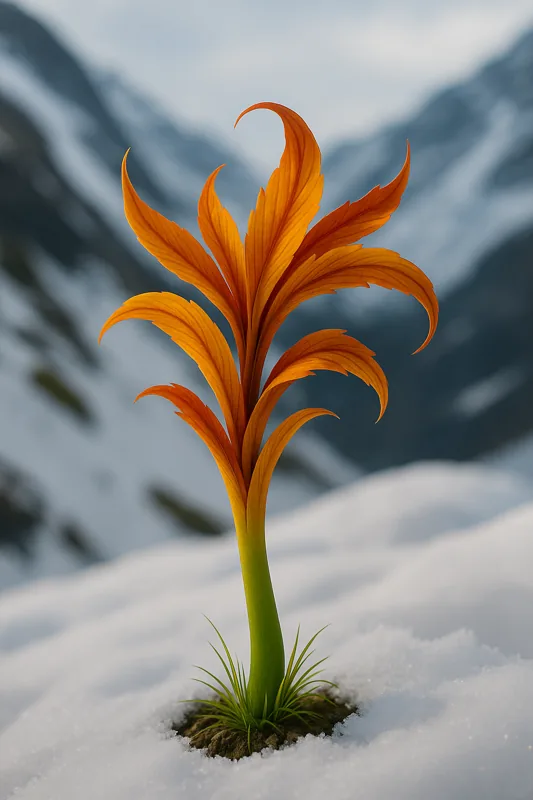 Yellow Tulonia Yellow Tulonia stands proud against the white fields of high slopes, a sharp flame of gold in the endless cold, its tall smooth stalk rising from shallow star-shaped roots that cling fiercely to mountain soil, bearing fronds that burst outward in radiant arcs of amber deepening to sunset orange along the veins. It flourishes across mid-to-high snowbound slopes and sheltered alpine valleys of Northland's great ranges, wherever snows melt in slow patience and the stones remember how to warm at midday. The leaves shimmer faintly when brushed by mist, throwing flashes of colour across the snows.
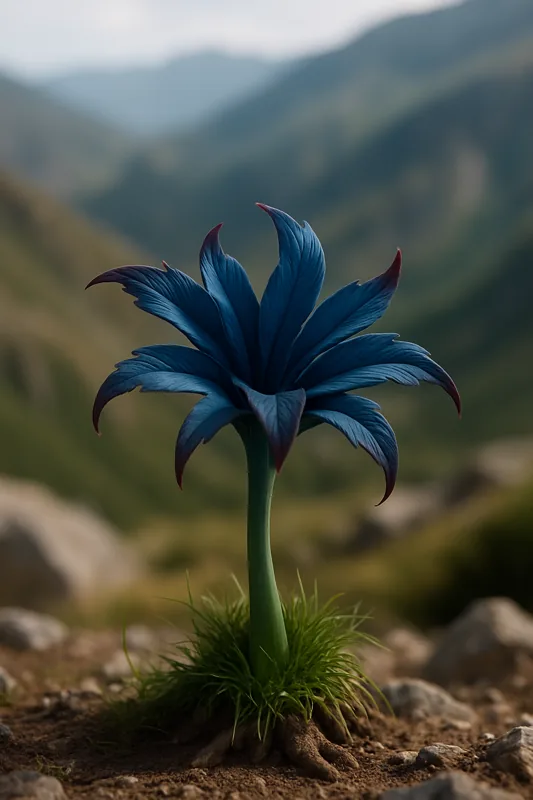 Esons Esons rise like living flames across the southern jungles and mist-fed plains, their tall, supple stems bearing enormous crown-stacked fronds of impossible colour: radiant gold streaked with blue, flame-orange striped with blood-red, deep indigo tipped in dusk-purple, or pale ivory traced with delicate veins. Though called flowers in common tongue, Esons bear no true blooms; their vivid structures are broad, sporewoven fronds breathing mist and slow, deliberate majesty. They are native almost entirely to the southern continent, flourishing in and along the outer margins of the Deep Jungles, with small outposts reaching into Baramma at the edges where the breath of the Great Waters still feeds the earth.
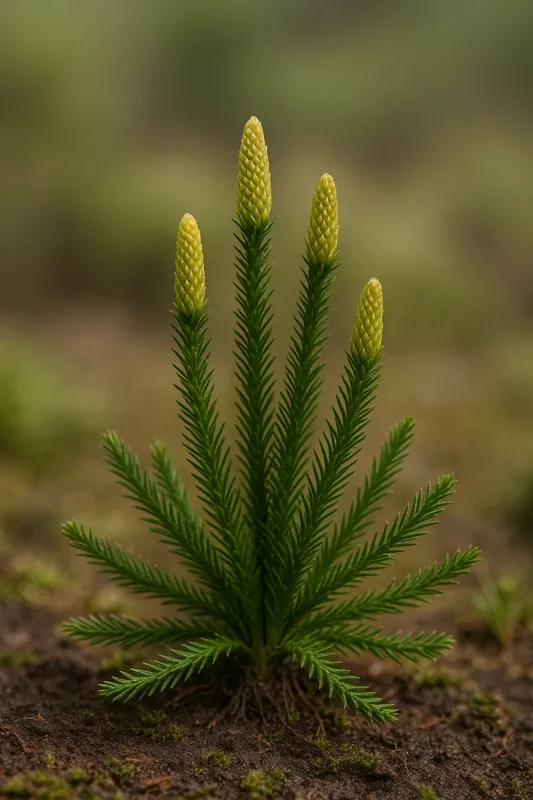 Clubmoss The Clubmoss rises no taller than a child's hand, but with stubborn grace, its needle-like leaves spraying outward in even whorls from a central root to form starbursts of green that drink the mists between suns. At the peak of each green arm grow slender spore-torches, pale yellow, tightly scaled, and faintly glowing in certain lights like candles seen through morning fog. It carpets shaded clearings and clings to the lower flanks of the Bridge Mountains, tracing elder riverbeds where the ground remembers its own fertility.
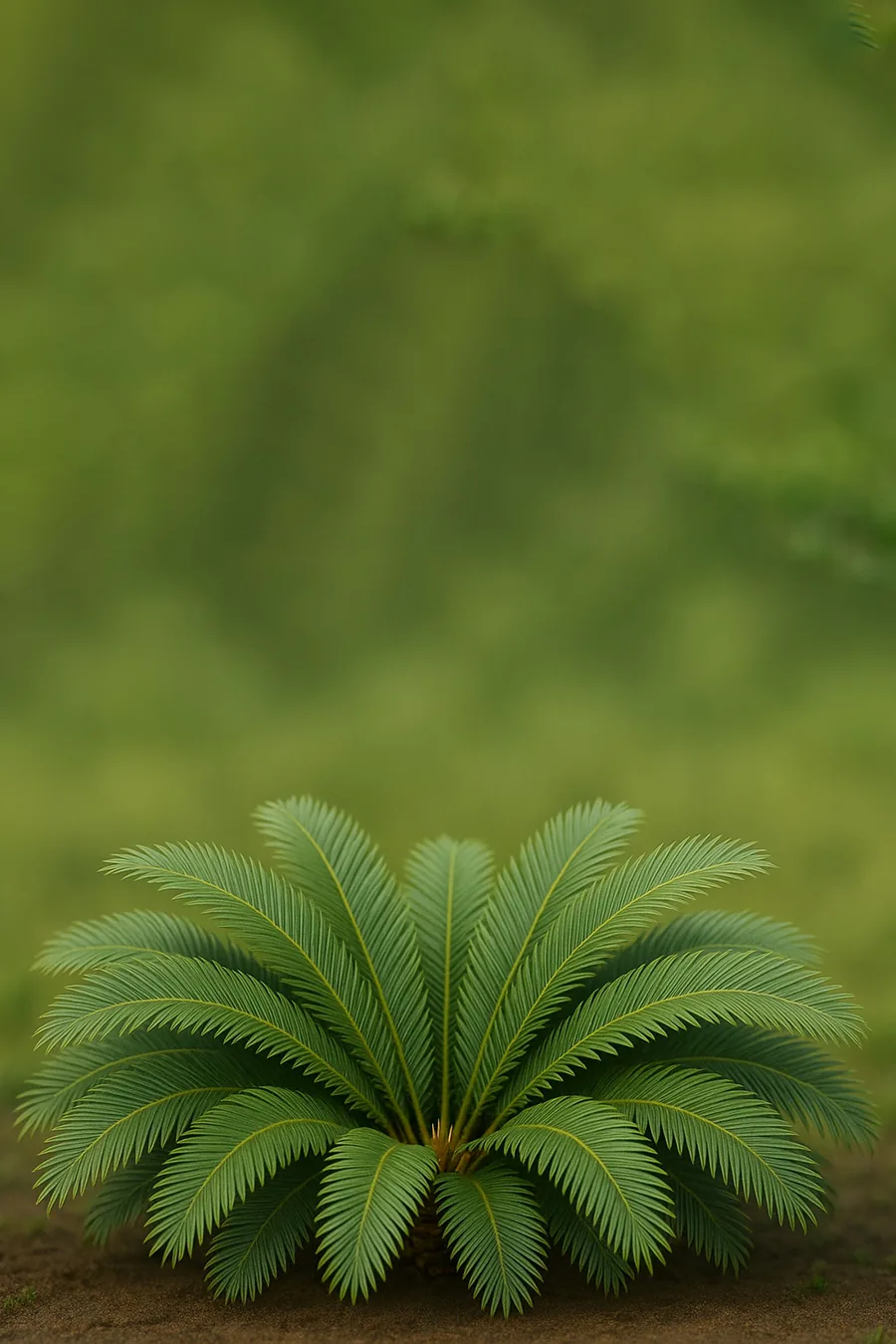 Cycas Grass Cycas Grass spreads as a slow rosette of thick, serrated fronds with a waxy gleam that is a cruel herald of the danger they cradle, each blade shaped with harsh precision around a cluster of hard, seedlike nodules nestled deep beneath the foliage. It grows wild in dry, stony soils across the Bridge Mountains, Divider Valleys, and flood-shadow plains of Northland, favouring abandoned clearings and forgotten river terraces where the land is wounded and rains fall uncertain. Its caustic tissues make it profoundly toxic to nearly every sentient species, and resistant to drought, fire, and flood alike.
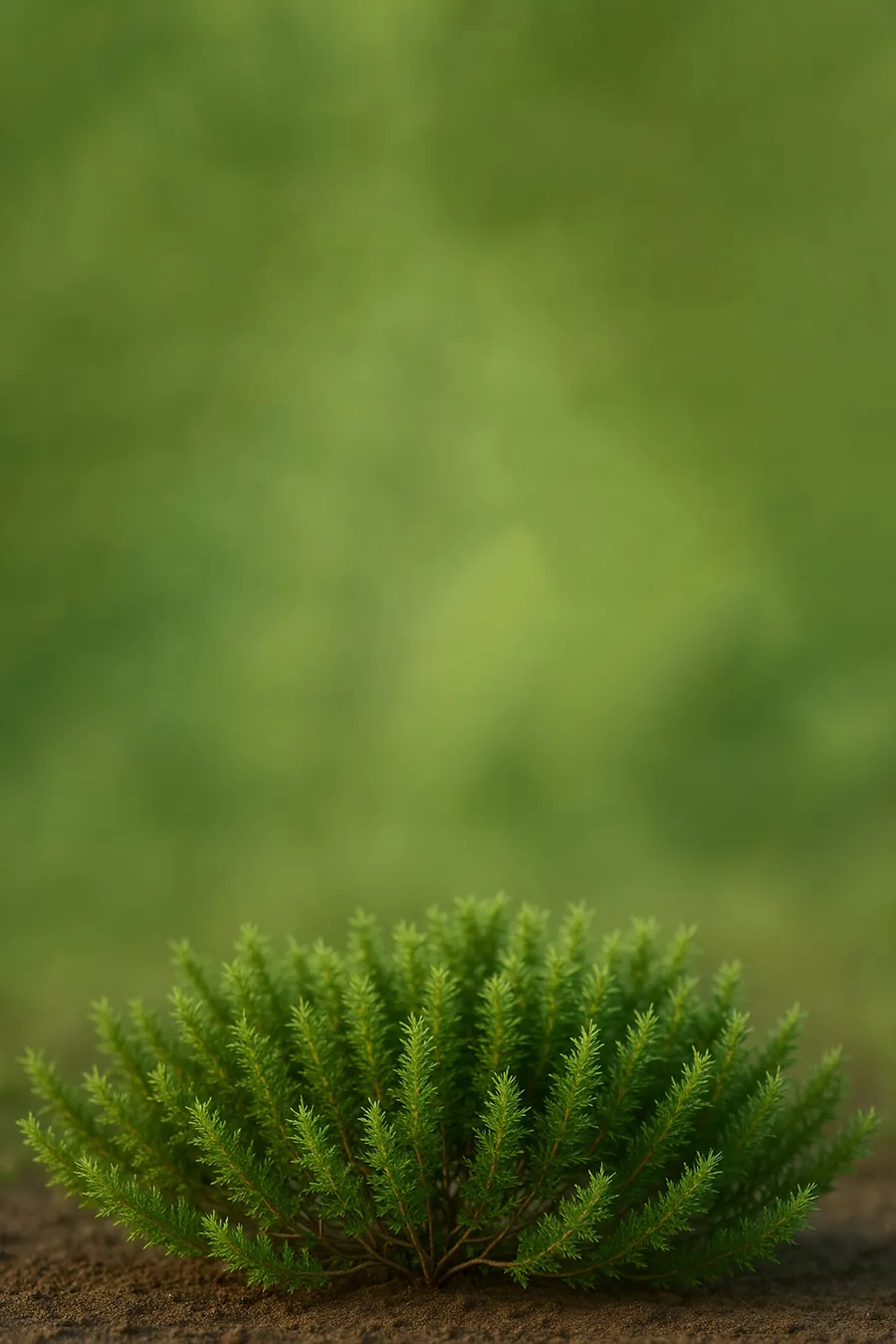 Cypress Grass Cypress Grass grows in dense, low fans, each spray of needled green finer than a feather and sharper than first frost, its stems arching outward in perfect symmetry to weave carpets of dark jade across riverbanks, foothills, and lonely plains. It thrives in the drier margins between forest and open land, wherever water is scarce but the mists still remember how to fall, from the eastern high meadows of Northland to the lower ridges of the Divider Mountains. In full mist or dawn rain, the tiny needle-leaves catch the light like woven emerald lace and a whole meadow can shimmer as if the ground itself were breathing.
 Desert Fern The Desert Fern is a ground-hugging radial rosette with twelve to sixteen lanceolate, deeply serrated fronds extending outward in a near-perfect spiral, their surface micro-crystalline and shifting in colour from deep indigo to metallic violet with copper or magenta edges catching angled sunlight. It colonises arid, exposed terrain, occupying the ecological niche of a primary ground-cover species in marginal desert ecosystems where few other plants can persist. At dawn the fern appears velvety black and damp; by midday it becomes a heat-reflective shimmer, half-folded into survival mode.
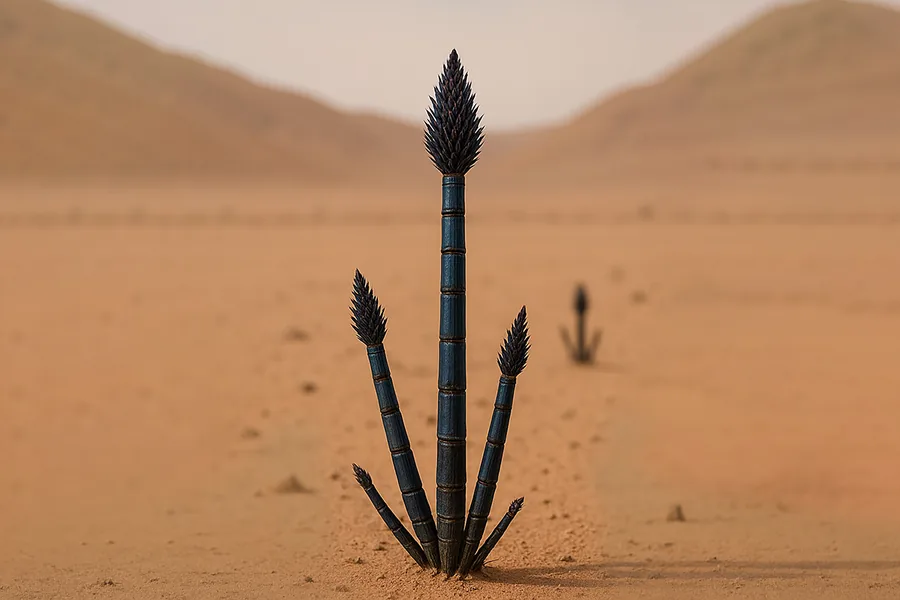 Desert Horsetail The Desert Horsetail rises starkly from barren desert floor, its unmistakably columnar and modular form composed of rigid repeating nodes alternating between steel-blue and obsidian black with faint copper banding, each stem reaching up to 1.2 metres and terminating in a dark violet-black bristle-like apical cone. It occupies arid, high-radiation environments alongside the Desert Fern, reaching skyward where the Fern harvests low and wide, together filling complementary spatial niches in the same marginal ecosystems. The surface of every segment is matte-metallic and finely striated, suggesting silica-reinforced tissue built for structural strength and low reflectivity under harsh sunlight.
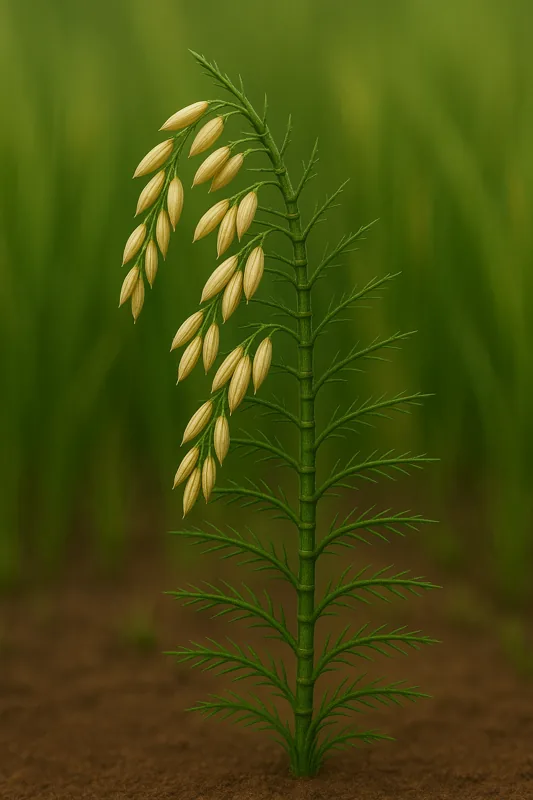 Dewsown Dewsown rises as a slender, jointed reed, each ribbed segment crowned by small whorled fronds that splay like fingers greeting the sky, with plump golden grains dangling in soft clusters along the higher nodes, catching morning mists in a glimmering net. It roots wherever the soil is dark, damp, and rich, across river basins, floodplains, and the mist-fed fields of the Napmeadows and the Green Shadowlands. When a Dewsown field sways under the twin suns, it looks as though the earth itself breathes in slow, rippling sighs.
 Durlach Durlach grows as narrow, dense vertical fronds that superficially resemble ferngrass blades but are finely divided like true ferns, forming tight clonal mats each stalk lined with underside sori protected by microtrichomes and antifreeze proteins. It colonises the edges of habitable terrain in cold regions, from permafrost margins to wind-scoured ridges and the boundaries between frozen waste and thawing lowland, remaining photosynthetically active down to approximately minus twenty degrees. Among the first plants to establish on newly thawed ground, Durlach binds soil and prepares it for more complex species to follow.
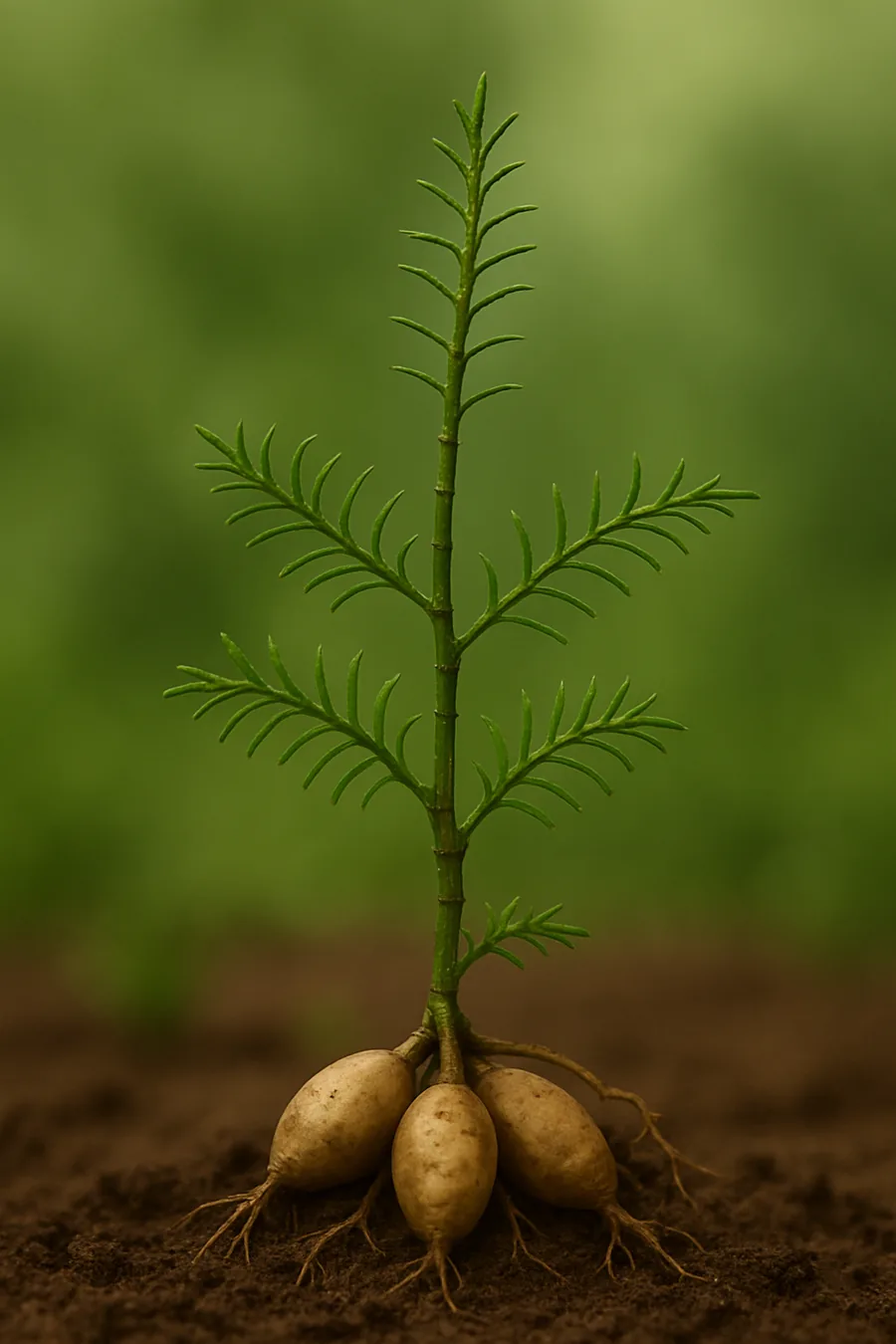 Duskroot Duskroot is a modest, low-swaying plant with slender segmented stems arching upward above pale roots that thicken underground into swollen, knotted bulbs heavy with stored breath, shaped like misshapen pearls of stone and clay. It thrives across the cooler floodplains, mist-fed terraces, and soft uplands of Northland, particularly alongside Ferngrass meadows and the misted edges of the Napmeadows, favouring soils that breathe but do not weep. In the soft light of Stormtide mornings, a field of Duskroot gleams faintly silver at the tips.
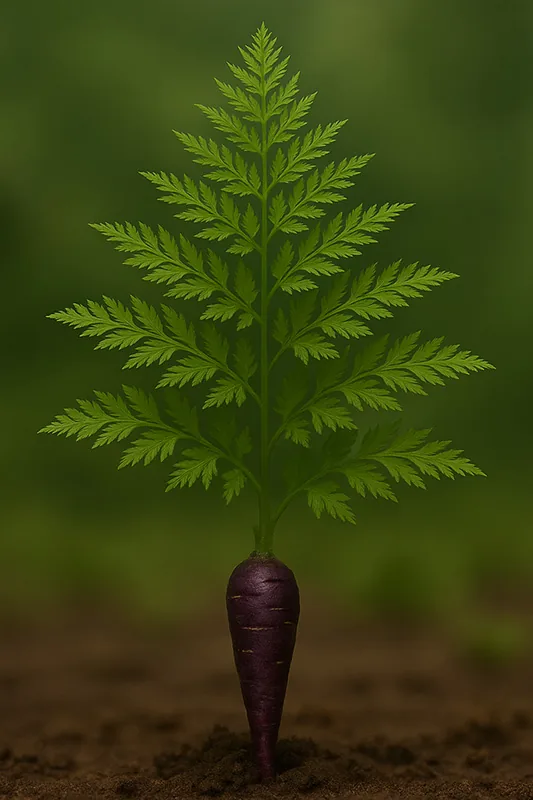 Eragroot Eragroot stands modest and patient above ground, its slender fern-limbed fronds shaped like feathered fans of mist and morning, while beneath the soil its true heart grows as a fat, tapering root whose inner flesh shifts in hue from deep violet to gold to red to white, depending on subtle secrets of soil and season. It grows both wild and tended across the river valleys, meadow-belts, and foothills of Northland, rooting best in deep, well-drained soils rich with last year's rain. By look alone the roots cannot be told apart; only the memory of the land and the luck of the gatherer reveal each variety.
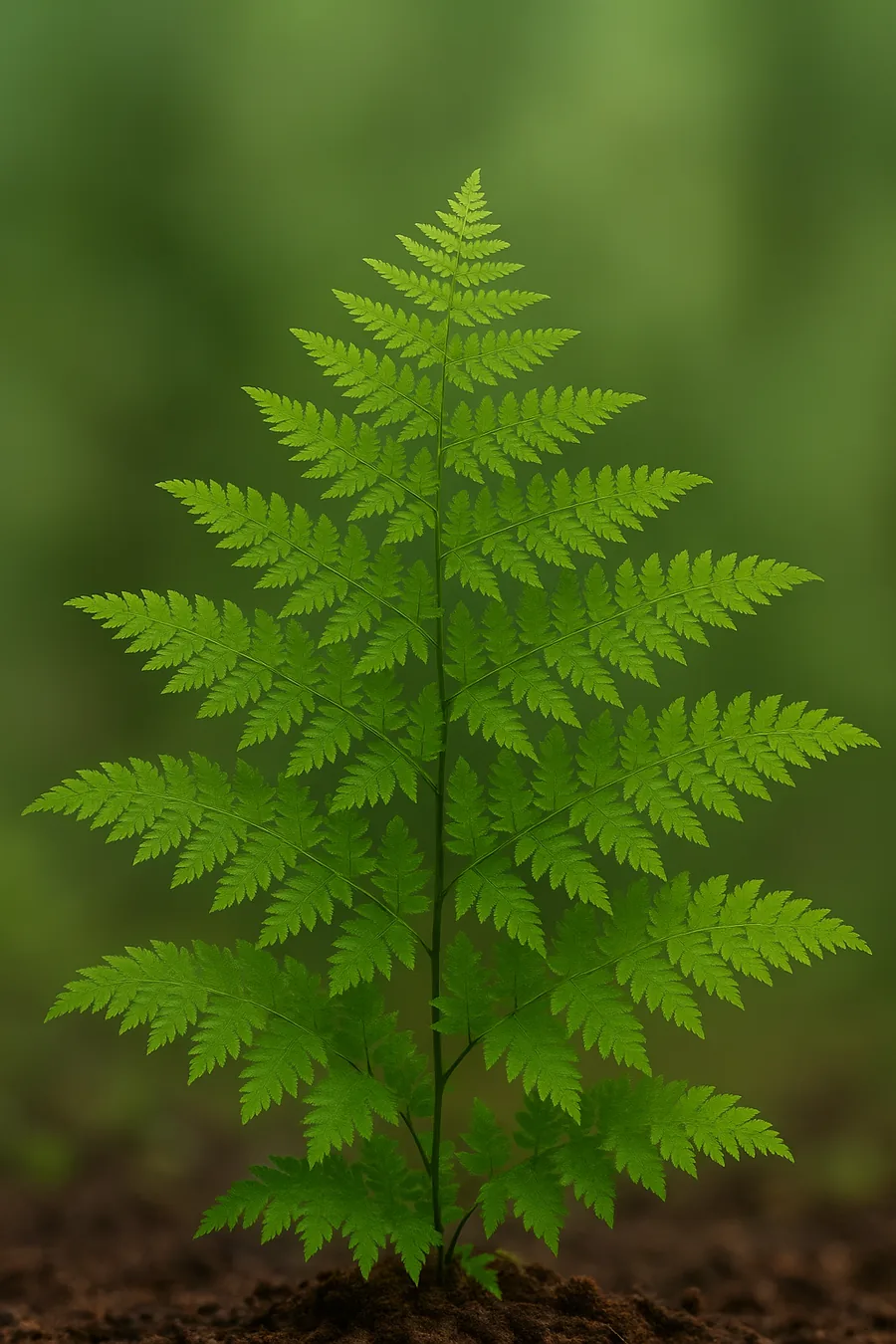 Ferngrass Ferngrass rises in quiet, endless ranks across the skin of Elshore, each stalk growing straight and slender, branching into countless feathery fronds that weave the air into green breath, forming living tides across nearly every plain, meadow, riverbank, terrace, and hillside on the world's open bones. It is not a true grass but a spore-reproducing fern that fills the same ecological niche, enduring drought, frost, flood, and fire with the patience of something older than speech. Under twin dawns, vast fields shimmer like broken mirrors stitched by dew, each blade catching the suns' low light.
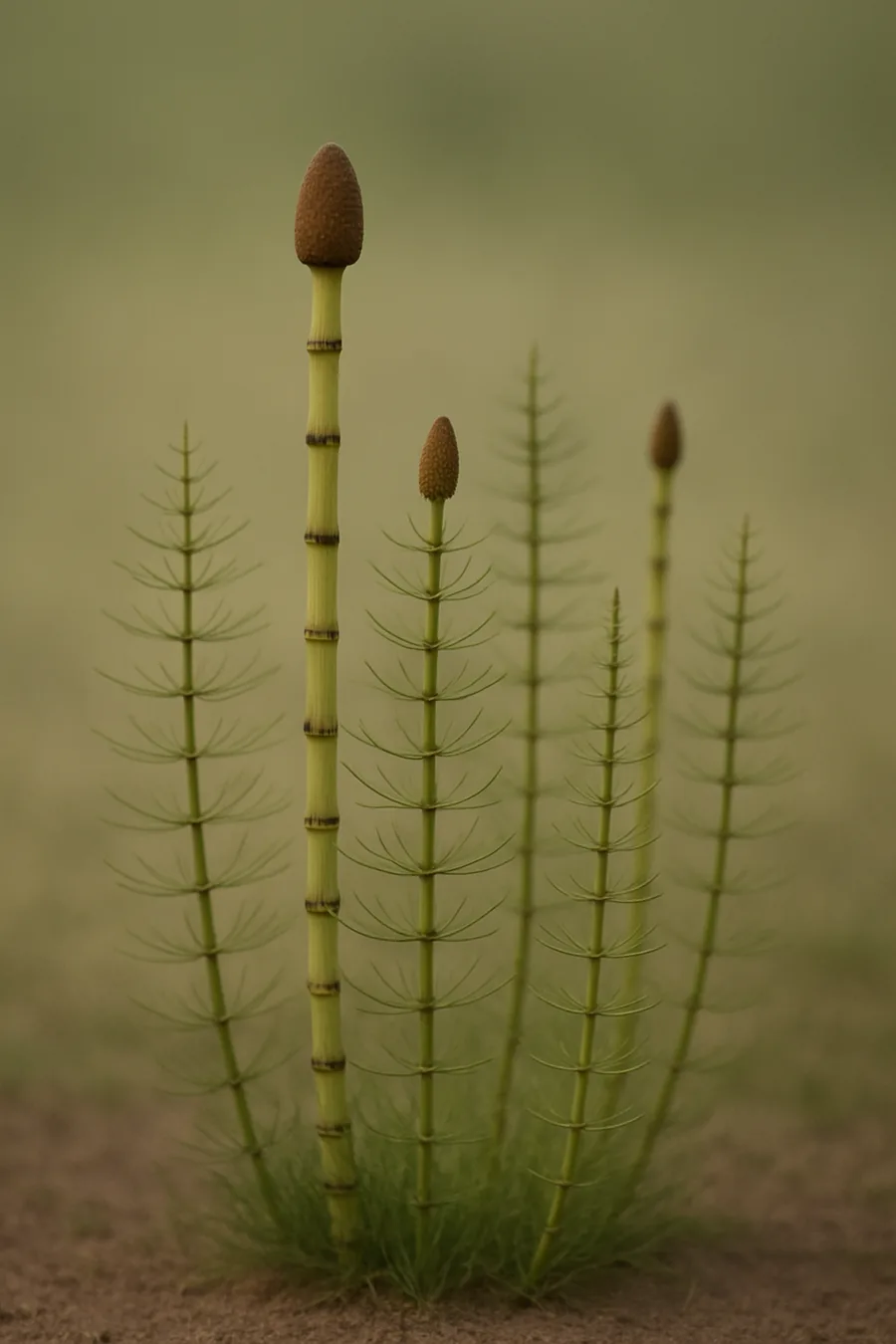 Horsetails The Horsetail rises slender and segmented from wet earth like counting bones, thin ribs of whorled branches splaying outward from each joint and casting delicate shadows, each stem topped by brown, grainy spore-bearing cones. It thrives wherever the earth runs rich with hidden water, growing across swamp margins, riverbanks, flood-drenched meadows, and the misted lowlands of Northland as a patient keeper, weaving green nets over wounded soils. In the soft fog of morning, whole fields of Reedstalks seem to hum and breathe, whispering secrets too old for words.
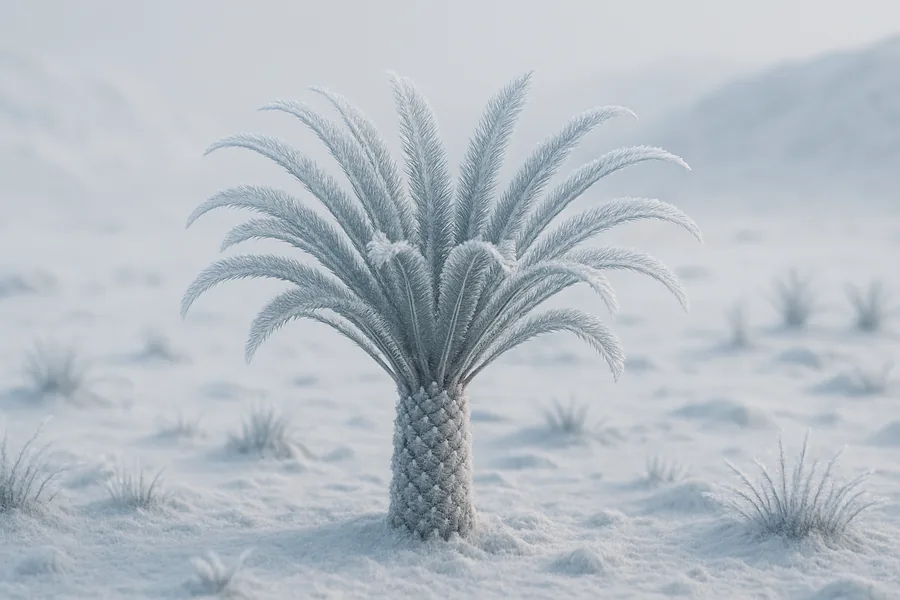 Karthan Karthan appears as coarse, blade-like fronds rising ten to forty centimetres in a radial burst from a fibrous, woody base that persists through freezing cycles, its waxy leaves coiling closed during frost and unrolling during warmth, with a subterranean starch-storing caudex tightly insulated by dead foliage. It colonises cold plains and windswept uplands where few other plants survive, rooting deeply into frozen soils and drawing on its starch reserves to endure long winters where freeze-thaw cycles dominate the seasonal rhythm. As a mid-layer primary producer, it shelters smaller organisms within its radial frond structure and buffers the microhabitats it creates against drought and cold.
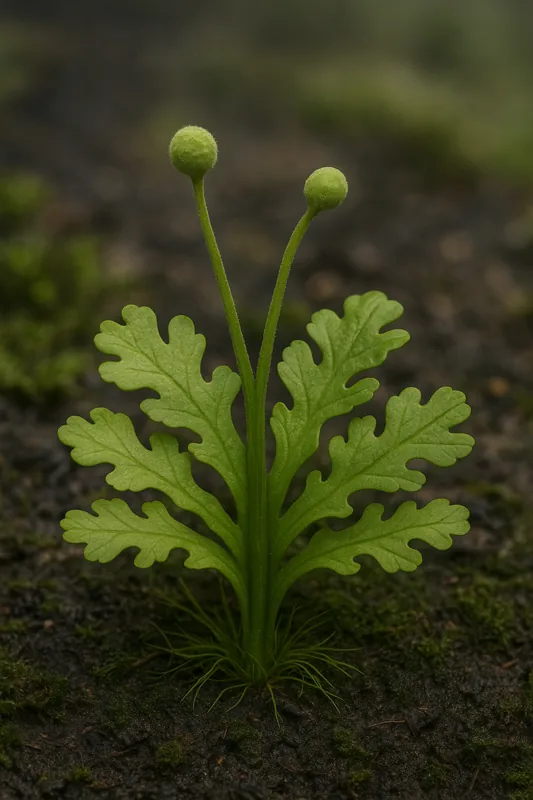 Liverwort Liverwort spreads low, close, and patient across the earth, its fleshy leaf-like fronds curving outward from a tight centre, each one veined like an ancient map with edges cut into soft lobes that catch dew and starlight, tiny rounded spore-caps rising from slender stalks at the heart. It carpets the wetlands, shaded riverbanks, and mist-fed clearings of Northland, especially along the low valleys beneath the Spine of the World and in the tangled floodplains near the Land of Green Shadows. In morning mist, a meadow of Greenblood gleams silvered and breathing, as if the ground itself had grown a second skin.
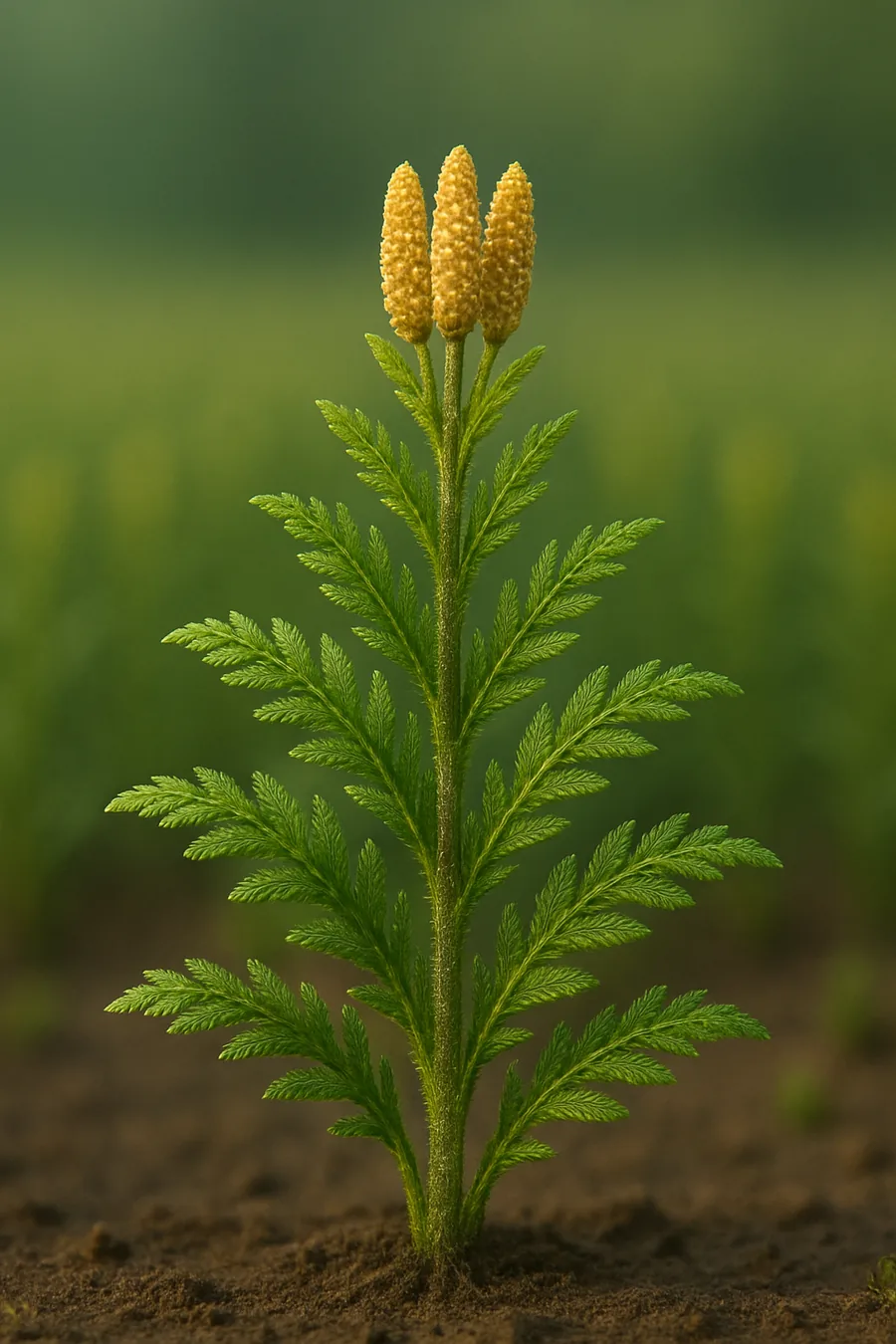 Sporegrain Sporegrain stands with quiet, steadfast grace, slender and fernlike, built of finely feathered fronds branching from a dark supple stalk and crowned by golden sporecones clustered like watchful sentinels, each bearing the ancient bounty of the fields. Its fields stretch across the heartlands of Northland from the golden Napmeadows to the fringes of the Green Shadowlands, wherever the earth is open to the suns and the mists rise just enough to kiss the roots. Under Namii and Uhiel's long gaze, entire plains sway with Sporegrain, golden tops nodding in slow accord with the winds.
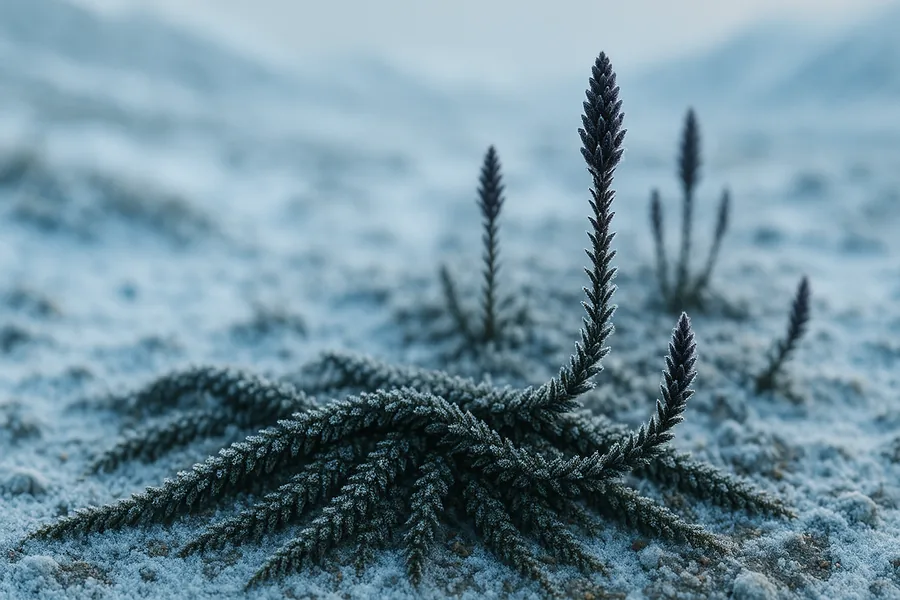 Tharneel Tharneel is a low-growing, mat-forming plant with horizontal scale-covered runners that spread like braided vines across frost-crusted ground, its intermittent vertical spore-bearing shoots dark green to violet and frost-tipped, the tiny overlapping microleaves spirally arranged and iridescent to absorb diffuse light. It colonises permafrost zones and subnivean environments, the frozen margins where most other plants cannot survive, rooting in shallow permafrost soils and stabilising frost-heaved ground with its spreading mat. Among the first responders to meltwater flushes, Tharneel prepares ground for other species as thaw cycles slowly expand habitable terrain.