Red Isuule
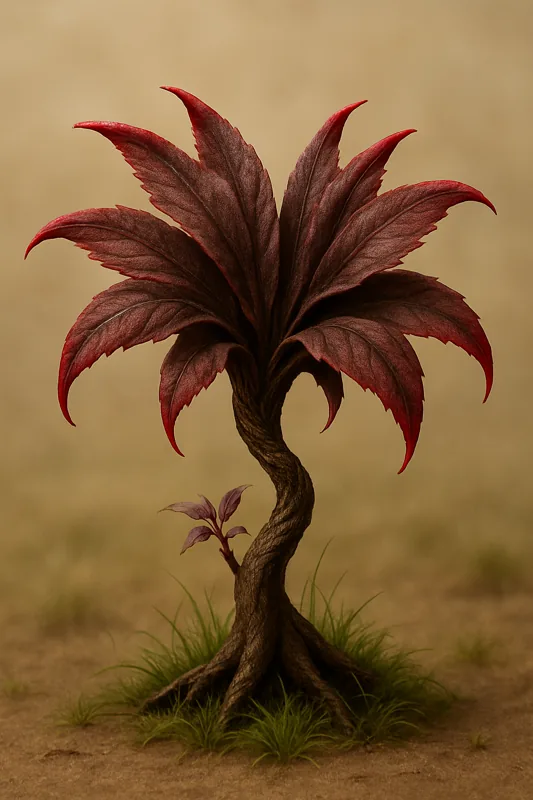
The Red Isuule grows in quiet, solemn grace, its thick twisted stem rising into a broad crown Place The Crown A newer foundry like a wide crown, a ring of tall pale spires flaring around a central stepped tower of lit decks, the broadest of the network. of flame-shaped leaves that arch in symmetrical, orderly tiers, shining dark crimson at the centre and fading to blood-orange at the tips. It flourishes across the warmer river terraces, lowland plains, and mist-fed deltas of central Northland Place Northland The northern continent of Elshore, called Northland in common speech, on which every chapter of the story so far unfolds., drawing all sustenance from the richness of the soil rather than from prey. Frost shrivels its stems and heavy snows kill it root and crown alike, keeping it entirely absent from the cold uplands where the Blood Isuule Natural History Blood Isuule The Blood Isuule rises from broken soil like a wound refusing to close, its twisted fibrous stems coiling upward into wide, blood-coloured serrated leaves that dry and claw inwa... thrives.
Key traits
- Releases spores primarily through its older leaves, allowing steady spread across nutrient-rich soils without any carnivorous adaptation.
- Young specimens often develop flexible side branches that anchor deeper into surrounding soil, stabilising the plant during flood seasons.
- Red Isuule depends wholly on soil richness, thriving best near old riverbeds, abandoned gardens, and tilled lands left fallow.
- Young leaves are harvested as low-tannin greens in drought years when softer crops fail.
- Dried Red Isuule fronds are used in tinctures and salves believed to soothe fevered skin, though far less potent than anything derived from the Blood Isuule.