Sigill Tree
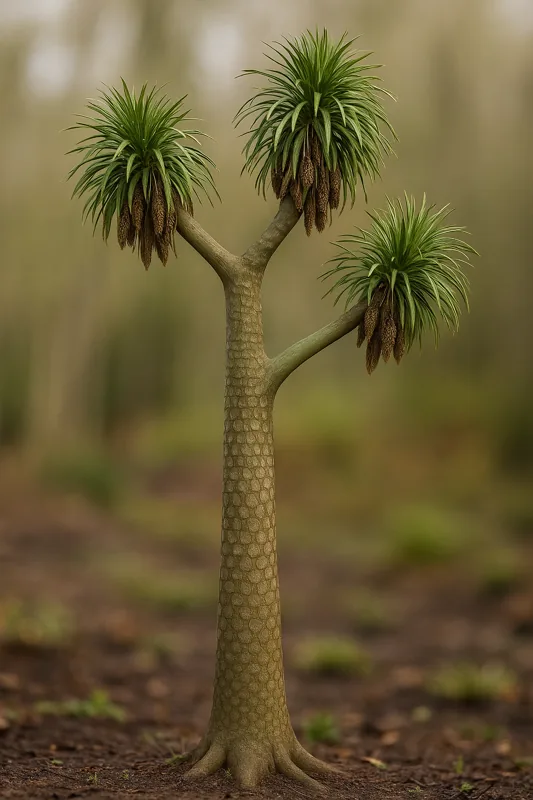
The Sigill Tree rises between twenty and thirty metres, its massive trunk clad in tessellated hexagonal bark-plates sealed to one another as though the world had stamped its mark there, its great clean limbs crowned with lance-shaped leaves from which heavy spore-clusters dangle like tassels on a king's robe. It favours silty riverbanks and floodplain fields, forming sparse, dignified stands where each tree stands spaced like a sentinel keeping solemn vigil. To the folk of the Sunfields and Baramma Place Baramma The great jungle island east of Tarkdaara, separated from the mainland by the Bram Sea and home to the Bar. alike, a grove of Sigill Trees marks final blessings: an end sealed, a beginning waiting to be sown.
Key traits
- Thick, tessellated bark shields the tree from fire, predation, and the long thirst of dry seasons.
- The Sigill labours for decades to build strength before flowering and casting its spores only once; its crown Place The Crown A newer foundry like a wide crown, a ring of tall pale spires flaring around a central stepped tower of lit decks, the broadest of the network. then withers into the soil, nourishing its offspring in a cycle treated as sacred reenactment of the twin suns' promise of renewal.
- Dense sporepod clusters mature beneath the crowns, heavy with sugar-rich sap that lures creatures of sky and land to spread the tree's lineage.
- Mature spore-nests harvested before the final dispersal yield a thick amber syrup called seal-honey, used to sweeten porridges, journey cakes, and ceremonial drinks across the Sunfields and Baramma.
- The tessellated bark, known commercially as sealbark, is layered with hardened plant resin to grow honeycomb burial capsules, the most modest tier of a reverent and enduring mortuary tradition.